EN

Beyond the Cabin: Complete Climate Solutions for the Cold Chain
Beyond the Cabin: Complete Climate Solutions for the Cold Chain
One supplier for the cab and the cargo
Most companies at a transport trade fair sell either cabin comfort or cargo refrigeration. DEFU does both, and that is not a marketing line — it is a consequence of building the whole product in one place. The same engineering team that tunes a rooftop parking air conditioner also builds the refrigeration units that keep a load at temperature, and the same factory
that moulds the housings assembles the compressors that go inside them.
For a distributor, that overlap is commercially useful. One supplier, one shipment, one set of contacts, one warranty conversation.
Transport refrigeration: mechanical and high-voltage
The first product on our "other products" wall is the unit built for long-haul trucks: a mechanical and high-voltage refrigeration system, configured for extended operation, available with either a belt-driven compressor or an electric compressor.
That choice matters more than it looks. A belt-driven compressor ties the cooling to the engine, which suits operations where the truck is almost always moving and the load is predictable. An electric compressor decouples cooling from the engine, which suits multi-drop distribution, waiting time at docks, and any route where the engine is off while the cargo still needs protection. Offering both from one supplier means a fleet does not have to change brand when its route profile changes.
Split refrigeration for 10–20 m³
The split unit is aimed squarely at the middle of the market: bodies and boxes in the 10–20 m³ range, where a full trailer system is overkill and a cabin cooler is useless. Condenser and evaporator are separate, so the unit can be configured around the body rather than the body being compromised around the unit. For light trucks, delivery vans and small distribution bodies, this is the volume band where most Brazilian operators actually work.
Service is a specification, not an afterthought
A refrigeration unit is judged on the day it fails, not the day it is sold. That is why we treat service access as a design constraint. Panels come off with standard tools. Control boards, fans and compressors are shared across the range wherever the duty allows it, so a distributor in Mato Grosso is not holding a unique part for a unique model. Diagnostics are deliberately simple: a fault code on the controller, a pressure reading at the service port, and a decision that a technician can make without a laptop and a factory engineer on the phone.
This matters more in the cold chain than in cabin cooling, because the consequence of downtime is measured in spoiled product rather than in discomfort. A delivery van that loses cooling for six hours does not need a repair — it needs a replacement load.
Rooftop refrigeration for 1–10 m³
At the small end, the rooftop refrigeration unit covers 1–10 m³ — the last-mile van, the pharmacy delivery, the food-service vehicle that has to arrive with the load still cold. Mounting on the roof preserves body volume, which is the whole point in a vehicle where every cubic metre is revenue.
Power products that complete the picture
Alongside the cooling hardware we show portable power units rated 12V/24V with 1,500W continuous and 2,000W peak output. In practice these close the loop: a vehicle that cools with the engine off also needs a reliable place to draw power from, and a refrigeration body that runs while parked needs the same. Selling the three together is how a dealer moves from "I sell air conditioners" to "I specify climate systems".
The commercial argument
Cold chain customers do not buy cooling for comfort. They buy it because a spoiled load costs more than the equipment, because a rejected delivery damages a relationship, and because a temperature excursion at 3 a.m. is a phone call nobody wants. That is why our refrigeration units are specified, tested and delivered as systems rather than boxes, and why we would rather spend an hour on the stand understanding a route than send a quotation the same afternoon.
For distributors, the range also solves a stocking problem. Instead of carrying three brands across three categories, one supplier covers cabin cooling, transport refrigeration and power: fewer purchase orders, fewer surprises at customs, and one number to call.
The full range, in one place, this week
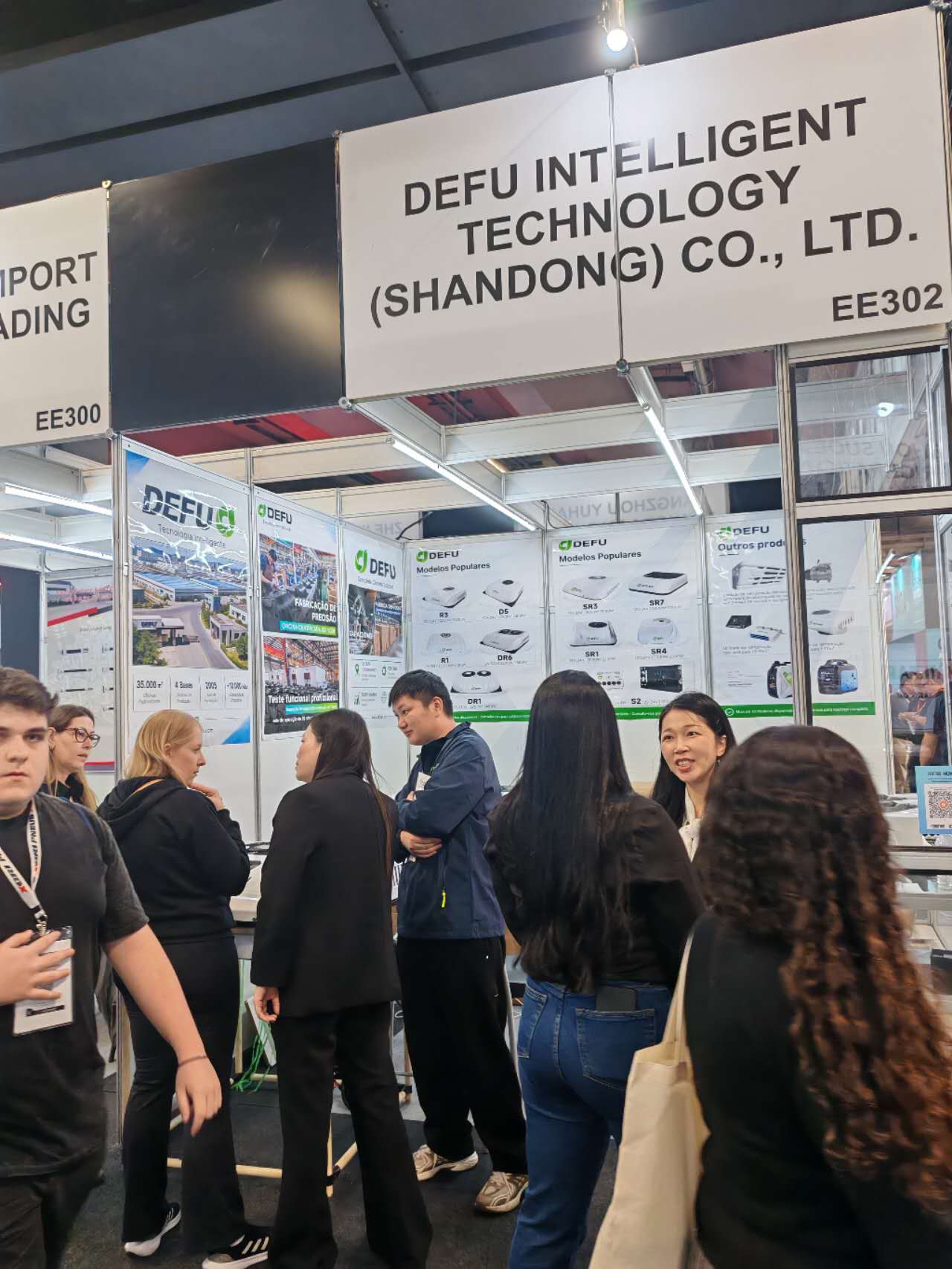
Booth EE302 carries the parking AC wall, the refrigeration units, and the power products together, with our engineers on hand to explain the belt versus electric decision, the split versus rooftop trade-off, and the volumes each one is designed for. If you operate a fleet, bring route data. If you distribute, bring the categories you want to add. If you build bodies, bring a drawing — a conversation about mounting is usually more productive than a catalogue.
Cab and cargo, one partner, one standard.