EN

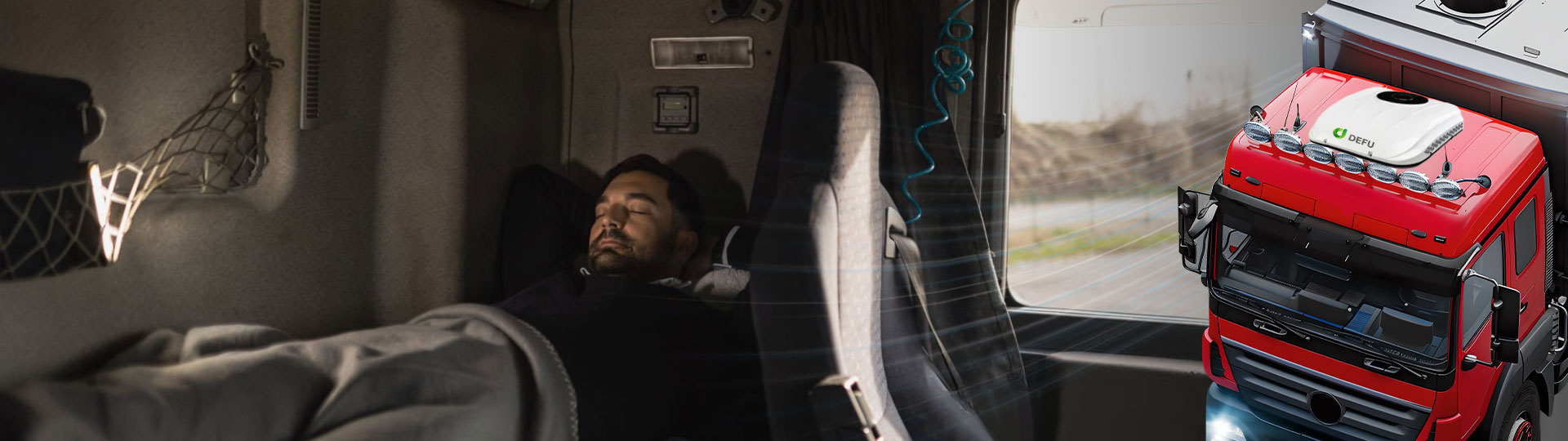
The Aerodynamic Gooseneck Advantage: Why Front-Wall Nosemount Refrigeration Dominates 4.2m Box Truck Logistics
The Aerodynamic Gooseneck Advantage: Why Front-Wall Nosemount Refrigeration Dominates 4.2m Box Truck Logistics
How an integrated 5KW nosemount condenser eliminates rooftop drag, harnesses natural airflow dynamics, and optimizes payload volume for light commercial vehicles.
|
KEY TAKEAWAYS FOR FLEET OPERATORS • Contoured Front-Wall Aerodynamics: Engineered with a sleek gooseneck profile (1260 × 530 × 450 mm) that fits neatly between the cab roof deflector and cargo bulkhead, minimizing turbulence. • Direct Ram-Air Heat Dissipation: Utilizing forward vehicle motion to force incoming airflow through dual high-velocity axial fans, maximizing condensation efficiency even on scorching asphalt. • Preserved Cargo Floor Space: Ceiling-mounted 1310 × 380 × 250 mm slimline evaporator preserves 100% of internal cargo clearance for palletized loading. • Robust Engine-Coupled Power: Direct-driven Carrier 160 multi-groove compressor delivers 5.0kW cooling power without draining truck alternator circuits. |
The Search for Aerodynamic and Thermal Harmony
In commercial refrigerated transport, front-wall aerodynamics directly dictate operational profitability. Traditional boxy rooftop units act like parachutes mounted above the cab, disrupting highway airflow, increasing diesel burn, and exposing condenser coils to overhead tree strikes and bird debris.
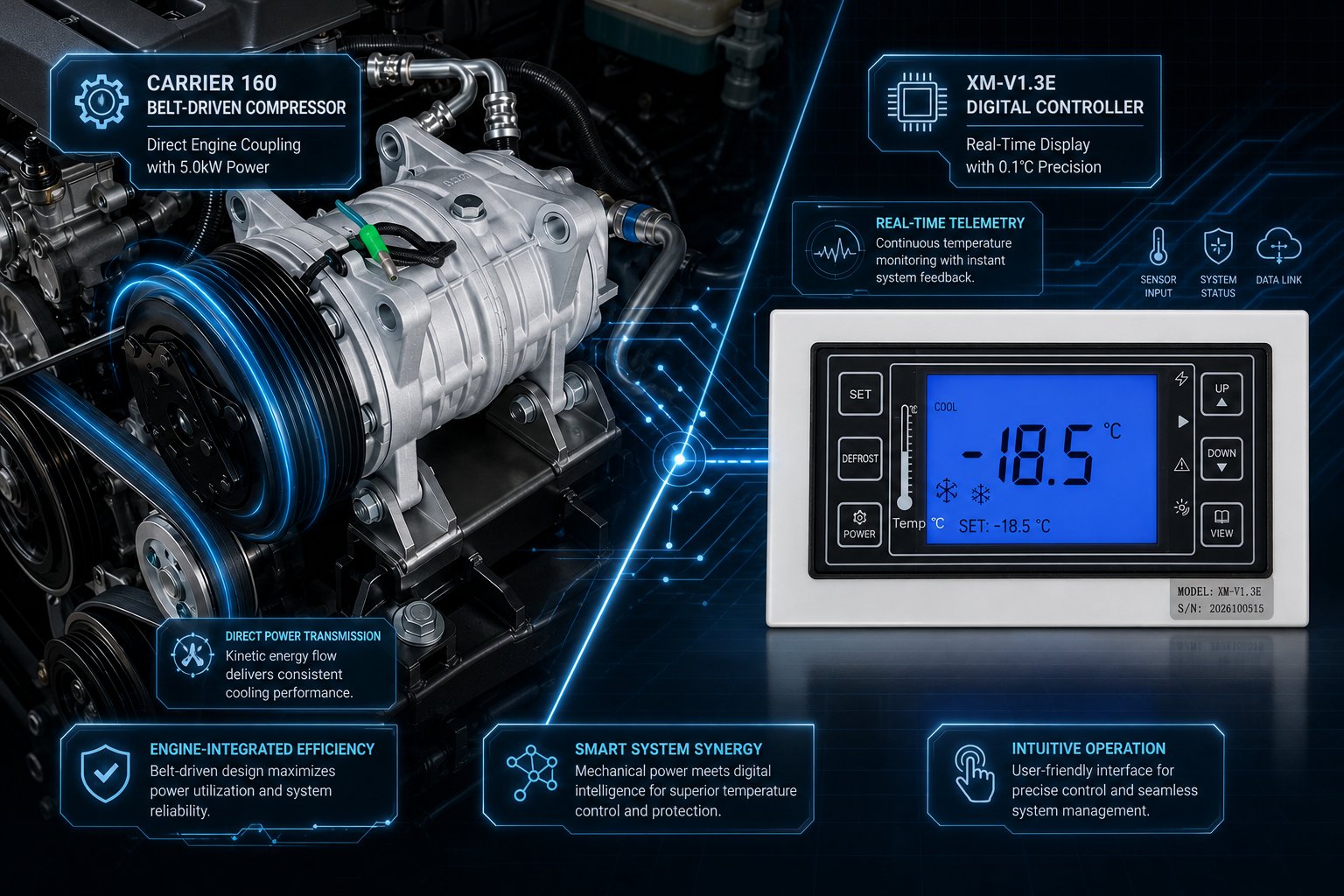
The Gooseneck Front-Wall Nosemount Refrigeration System solves this engineering challenge through smart spatial integration. Mounted flush against the upper front bulkhead of standard 4.2m box trucks, the aerodynamic stainless steel enclosure sits directly in the aerodynamic wake of the cab's wind deflector, channeling oncoming ram air directly across the condenser coils while maintaining a sleek, low-drag profile.
Four Core Pillars of the Gooseneck Architecture
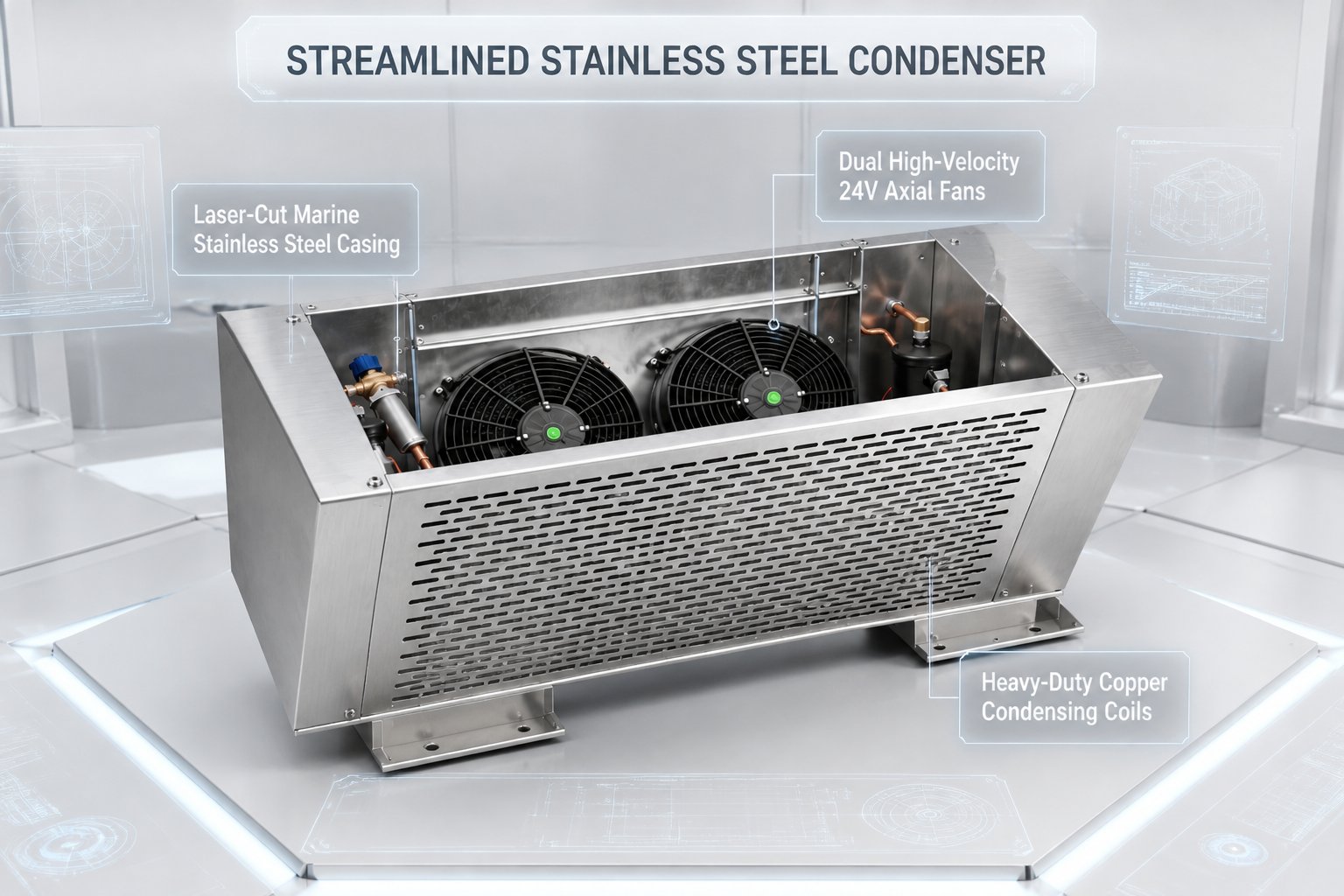
1. Streamlined Stainless Steel Nosemount Housing (126 × 53 × 45 cm)
Laser-crafted from marine-grade stainless steel with a high-flow slotted intake grille, the condenser housing resists road gravel, road salt corrosion, and structural oxidation. Inside, dual 24V axial fans pull massive volumes of air through heavy-duty copper condensing coils, ensuring rapid heat rejection during slow city traffic and high-speed highway transit alike.
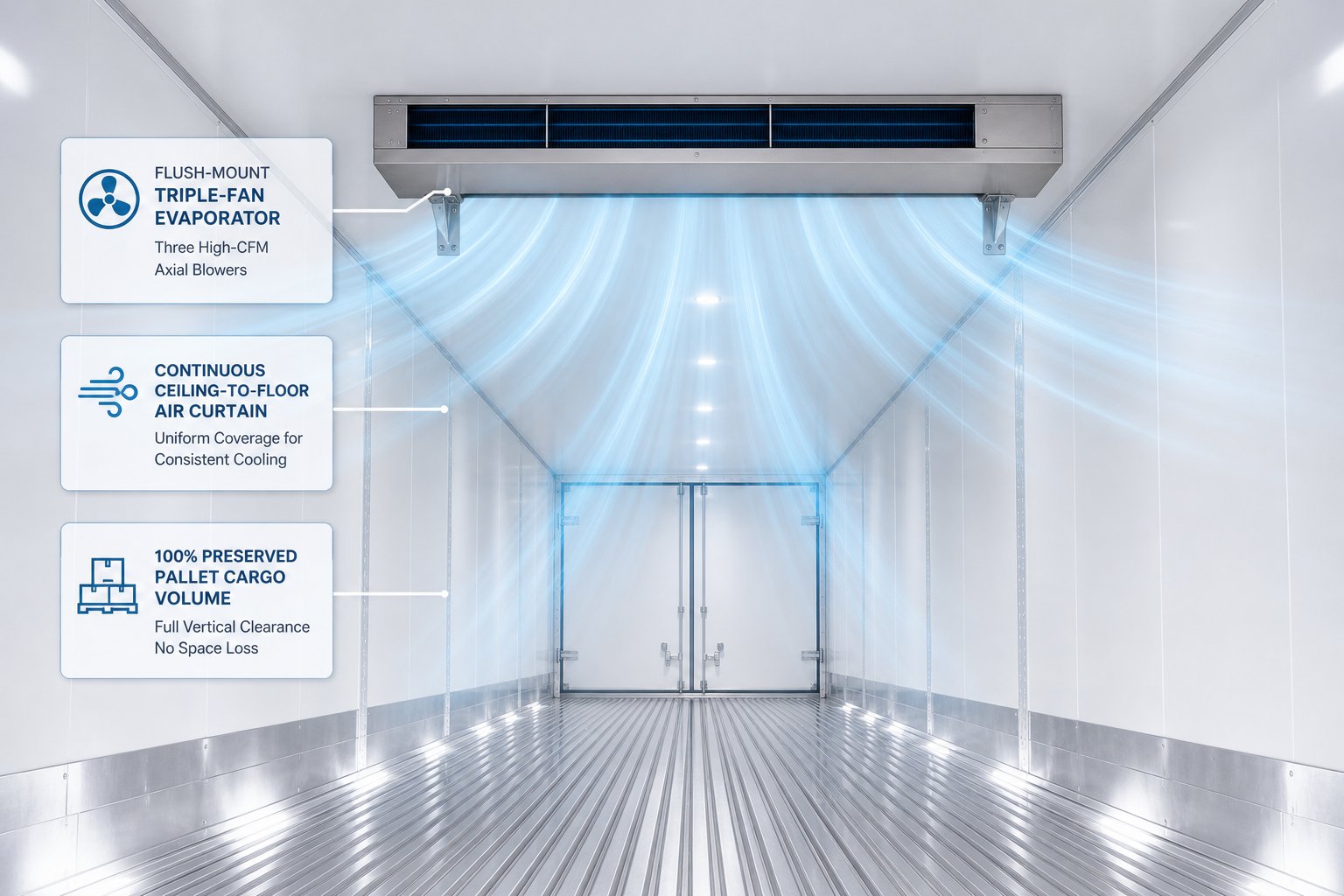
2. Flush-Mount Triple-Fan Evaporator (131 × 38 × 25 cm)
Inside the 16–18 m³ insulated box, the slim evaporator mounts tightly against the front ceiling bulkhead. Powered by three high-CFM axial blowers and a hydrophilic blue-fin coil, it propels chilled air across the entire length of the cargo bed, creating a seamless laminar air curtain that prevents temperature stratifications.
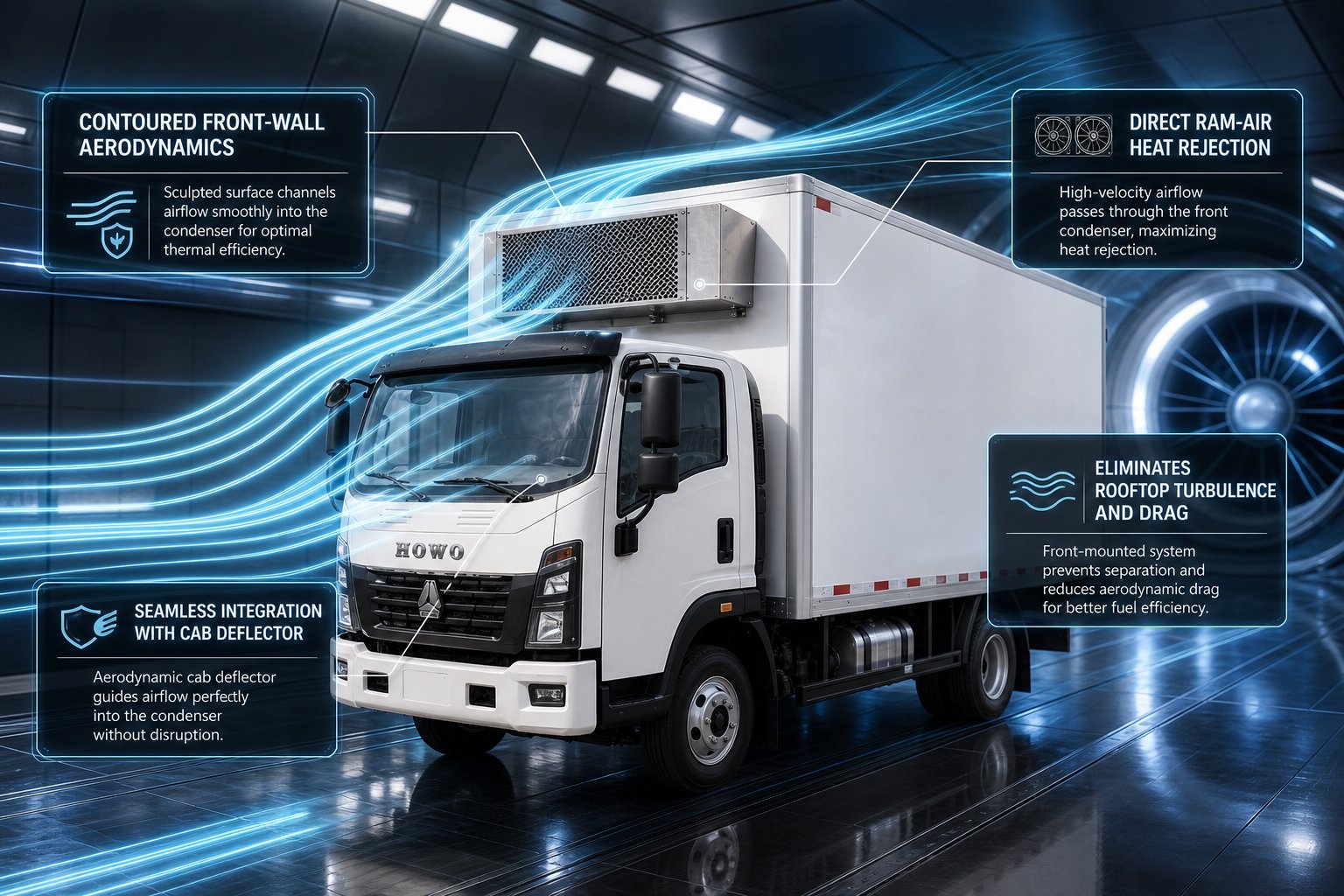
3. Heavy-Duty Carrier 160 Belt-Driven Compressor
Directly mounted to the engine block via precision CNC heavy-gauge brackets, the Carrier 160 compressor pumps high-pressure R404A refrigerant effortlessly at 5.0kW capacity, ensuring rapid temperature drop even when the truck is idling at distribution docks.
4. In-Cab Digital Controller (XM-V1.3E)
Drivers have full command at their fingertips with the blue-backlit LCD digital thermostat. Real-time temperature displays with 0.1°C resolution, one-touch manual/auto defrost modes, and built-in protection alarms guarantee cargo safety on every haul.
Conclusion: Designed for Fleets That Value Performance & Efficiency
The Gooseneck Belt-Driven Refrigeration Unit combines sleek highway aesthetics, maximum fuel efficiency, and brutal cooling power in one complete package.
|
CONSULT WITH OUR REFRIGERATION ENGINEERS Contact our engineering team today to receive detailed 3D CAD mounting blueprints and volume fleet quotes. |