EN
EN

Stop Paying for Comfort with Engine Idling: A Smarter Fleet Cooling Strategy
Stop Paying for Comfort with Engine Idling: A Smarter Fleet Cooling Strategy
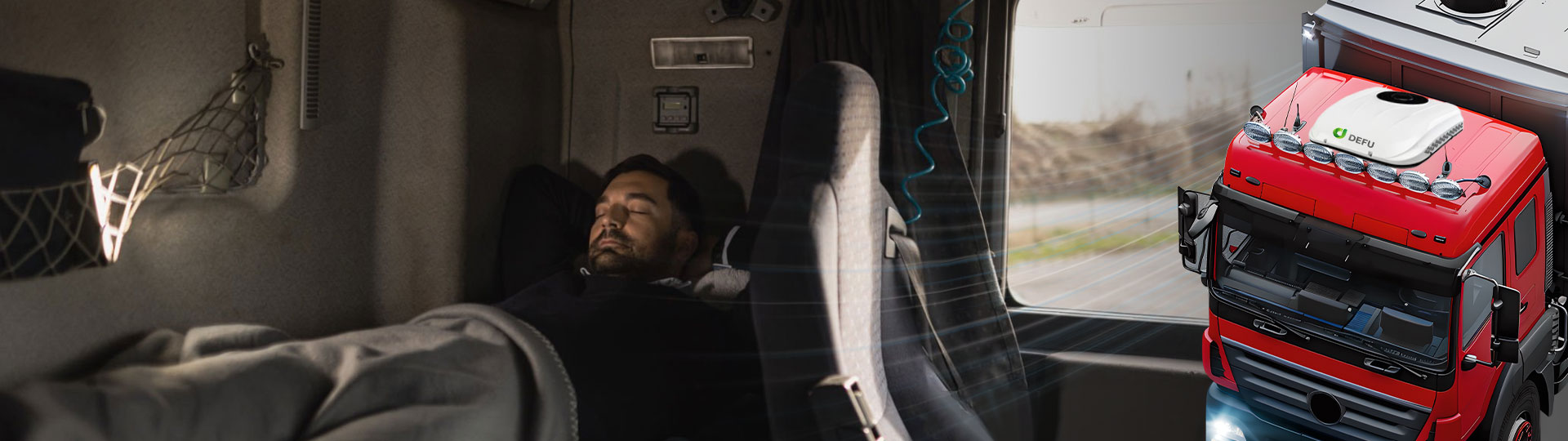
For a long-haul fleet, cab comfort is not a luxury. It affects how drivers rest, how vehicles are used, and how managers control operating costs. Yet traditional rest-time cooling often depends on leaving the engine running. That approach can create unnecessary fuel consumption, noise, wear, and exposure to local anti-idling expectations. A modern parking air conditioner offers a more practical alternative: keep the cab comfortable while the engine is switched off and make every parked hour part of a more disciplined fleet strategy.
Cooling When the Truck Is Parked
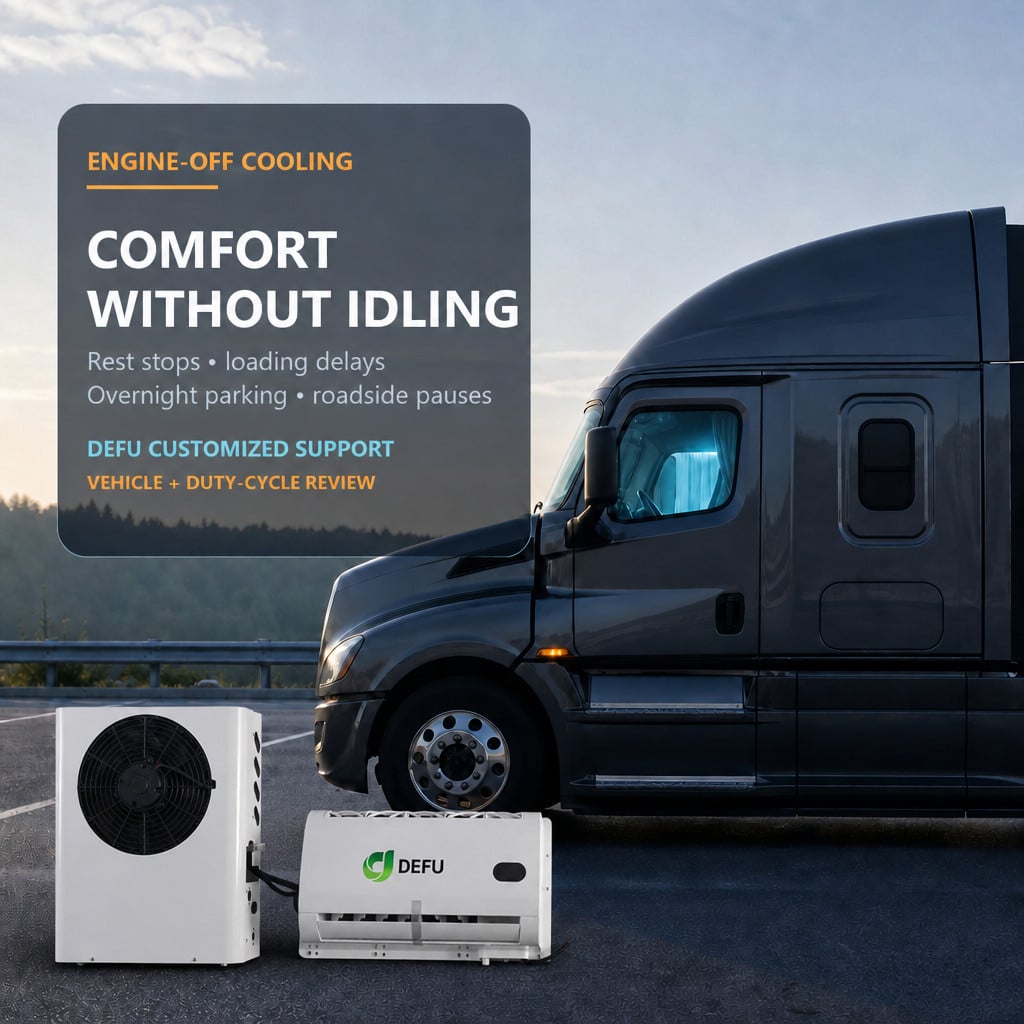
A parking air conditioner is designed around a simple operational requirement: the driver needs a comfortable cab during a rest stop, loading delay, overnight parking period, or roadside pause, but the engine does not need to be running just to provide cooling. By using an electrically driven compressor and a vehicle-compatible power architecture, the system separates cabin comfort from engine idling. This creates a clearer operating choice for fleets that want to reduce avoidable idling without asking drivers to compromise on rest conditions.
The value is not limited to one vehicle or one trip. When a fleet introduces engine-off cooling across a suitable group of trucks, managers can evaluate the impact through real operating data: parked hours, fuel use, battery status, driver feedback, maintenance events, and local operating requirements. The result is a decision based on the fleet’s own duty cycles rather than on a generic promise.
From Product Purchase to Total Cost of Ownership
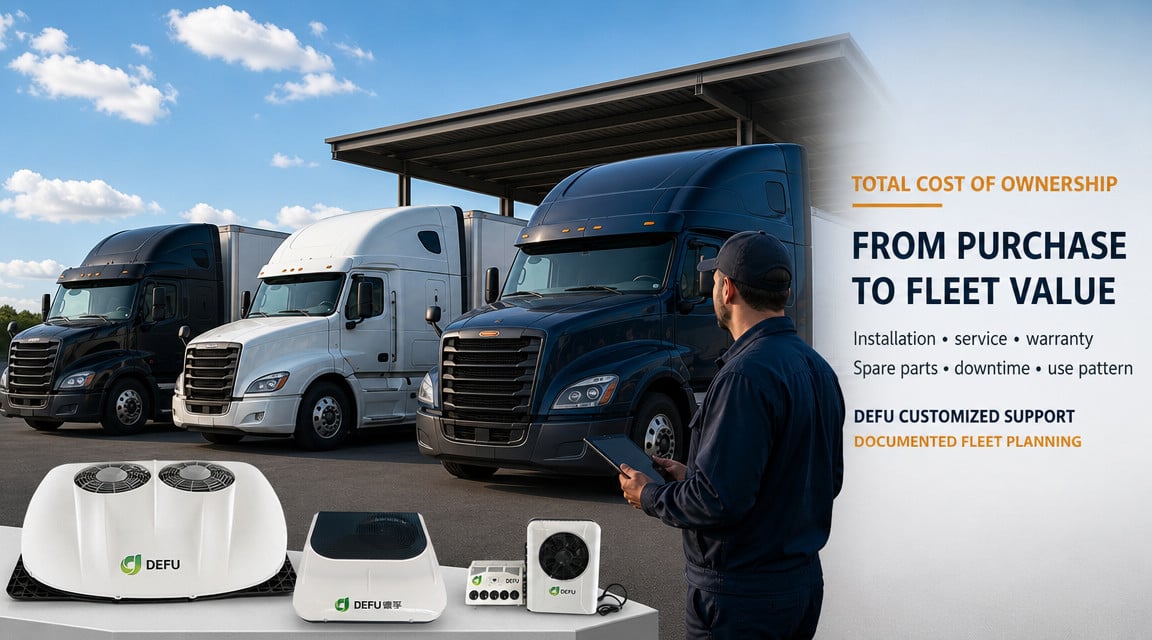
The right question is not simply, “How much cooling capacity does the unit provide?” The better question is, “What does this solution change across the complete operating cycle?” A fleet should consider the purchase price, installation, electrical compatibility, battery condition, service intervals, spare parts, warranty coverage, and expected use pattern. It should also consider the cost of unnecessary idling, driver dissatisfaction, and unplanned downtime.
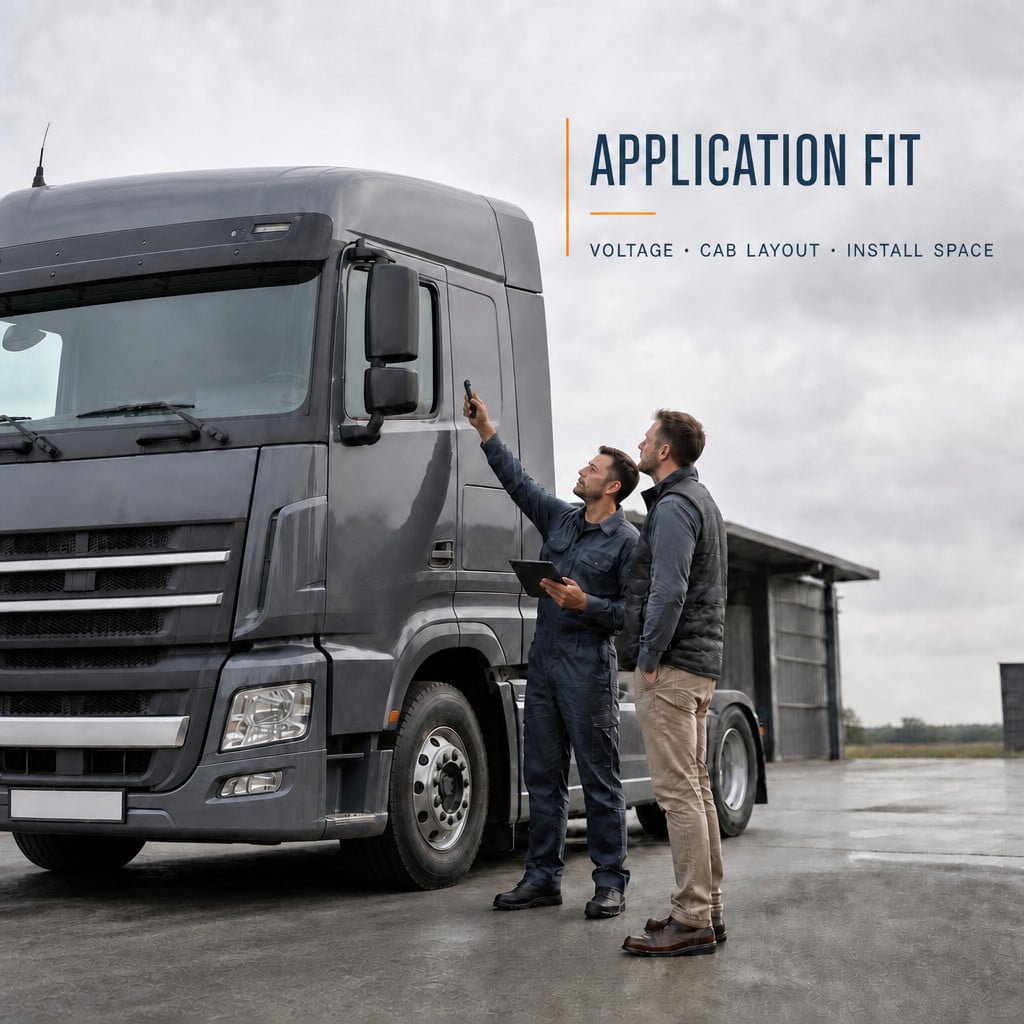
Our approach is to support that evaluation before the quotation stage. We help customers review vehicle voltage, sleeper or cab layout, available installation space, parking duration, climate conditions, and intended operating frequency. This information makes it easier to compare rooftop and split configurations, identify the right power strategy, and avoid selecting a product that looks attractive on paper but is not appropriate for the actual truck.
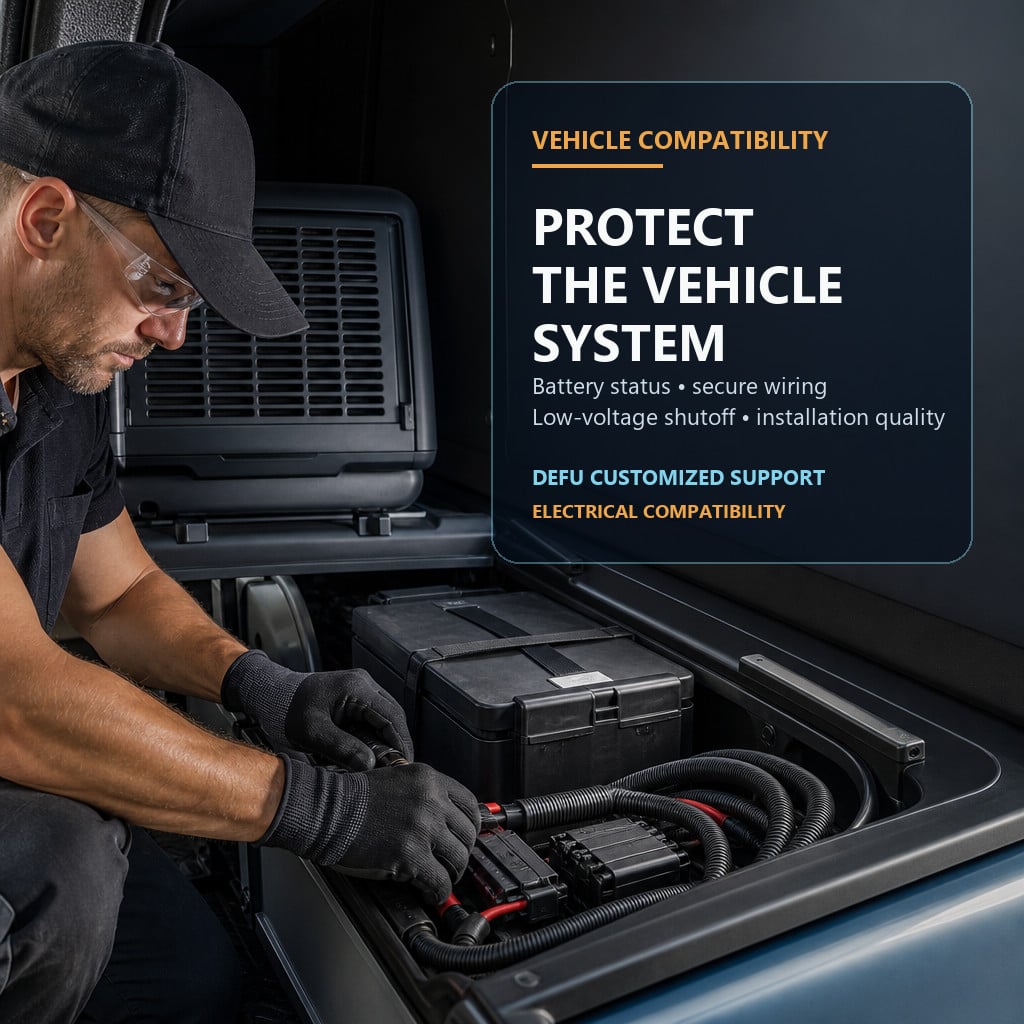
Protecting the Vehicle’s Electrical System
A professional parking air-conditioning solution must work with the vehicle, not against it. Battery protection, low-voltage shutoff, appropriate wiring, secure connections, and installation quality all matter. A unit that cools well but creates electrical uncertainty can become a service problem. For this reason, technical documentation should explain the operating logic, installation requirements, power assumptions, and limits of the system in clear language.
Customers should also ask how compatibility will be confirmed. Is the vehicle a 12V or 24V platform? What is the battery condition? How much space is available for the condenser, evaporator, or rooftop assembly? Will the selected installation affect roof structure, storage, lighting, or other equipment? These questions are not obstacles to a purchase. They are the foundation of a reliable purchase.
A Better Fleet Conversation
Engine-off cooling can support several fleet priorities at the same time: driver comfort, disciplined energy use, reduced idling, quieter rest periods, and clearer operating data. It can also help procurement teams compare solutions according to measurable requirements rather than slogans. Every fleet is different, so the most credible sales conversation begins with the application and ends with a documented recommendation.
If you are reviewing parking cooling for a single truck, a regional fleet, or a multi-market purchasing program, share your vehicle type, voltage, operating climate, parking routine, and expected quantity with our team. We can help you identify the right configuration, prepare the technical information required for internal approval, and define the next step toward a practical engine-off cooling program.