EN

Temperature You Can Defend: Cold-Chain Discipline for Pharma and Vaccine Transport
Temperature You Can Defend: Cold-Chain Discipline for Pharma and Vaccine Transport
Pharma and vaccine carriers operate under a rule no other cargo segment shares: the load can be destroyed without a scratch on the box. A single excursion that is invisible to the driver can invalidate a shipment worth more than the truck. For regulated biological transport, the question is never whether a reefer unit cools — it is whether it holds a defensible, documented temperature profile through the full journey, including the hours at the dock when the doors keep opening.
The Requirement Is Uniformity, Not Just a Setpoint
Biological loads are temperature-sensitive across the whole envelope, not only at the sensor. A unit that reads 2 °C at the evaporator outlet but leaves a +8 °C pocket behind the rear doors has technically hit its setpoint and still failed the cargo. DEFU belt-driven refrigeration units address this with a slim ceiling-mounted evaporator that projects a continuous ducted cold-air curtain along the roof toward the rear doors, pushing balanced circulation through palletized cargo instead of a single cold plume. For pharma, the advantage is thermal uniformity: fewer hot spots, less risk of an undetected excursion at the far end of the box.
Documented Pull-Down, Not a Guess
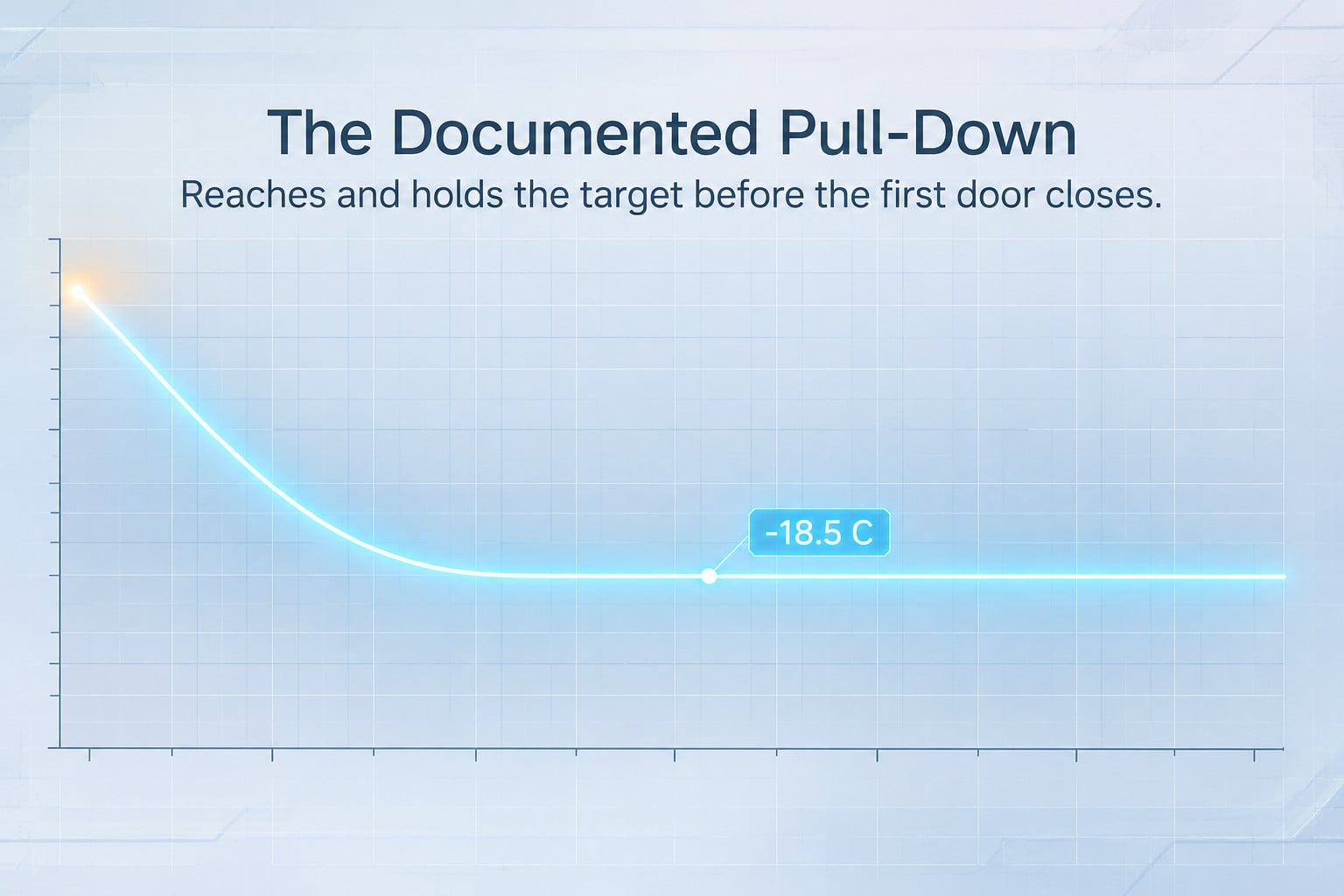
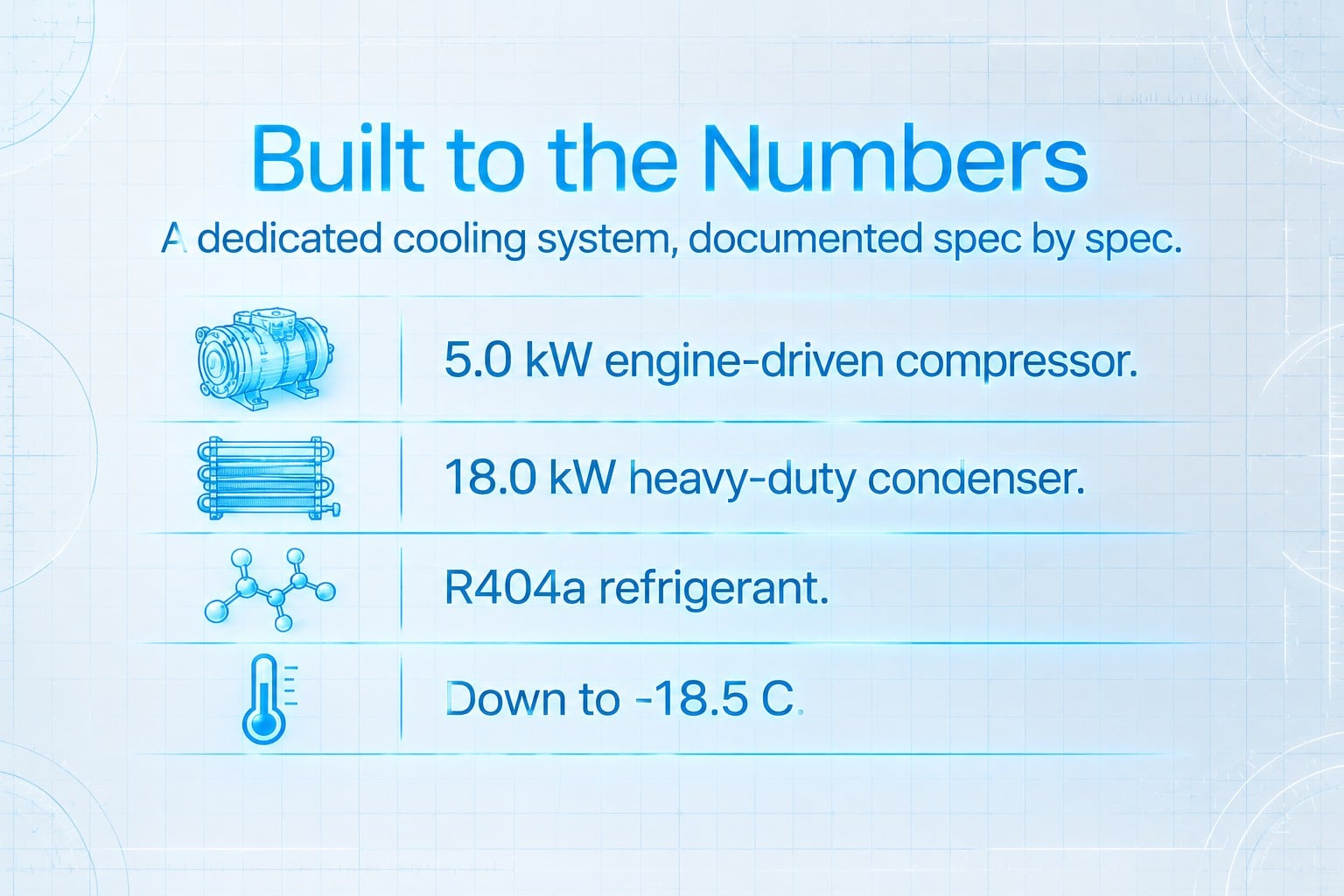
Regulated carriers must show, not assert, that the unit reaches and holds the required range before the first door closes. A belt-driven platform pairs a 5.0 kW engine-driven compressor with an 18.0 kW heavy-duty condenser, which keeps discharge pressure in a safe, efficient band even when ambient heat is high. That headroom translates to a faster, more reliable pull-down to the working range — and, because the unit is engineered strictly as a dedicated cooling system (pure cooling down to −18.5 °C with no reverse-cycle heating), the temperature profile stays clean and easy to document from departure to delivery.
Why Engine-Driven Belts Still Win in the Cold Chain
- Continuous capacity at speed: the compressor is driven off the engine through a belt, so cooling output follows the truck. On a long pharmaceutical corridor there is no battery to run down and no capacity ceiling that drops as the drive battery depletes; the unit delivers its full cooling duty the entire run.
- Stability under repeated door openings: pharma stops are short and frequent. Oversized condenser area absorbs the heat surge each time warm dock air floods the box, so recovery is fast and the profile stays flat instead of saw-toothing.
- Reduced excursion risk at scale: for a fleet moving biological cargo every day, fewer excursions means fewer invalidated loads, fewer audit findings and a cleaner temperature record to present at the next review.
The Operating Habit That Protects the Shipment
Architecture matters, but so does discipline. Standardize the pre-cool routine, verify the recorded pull-down before loading, keep the evaporator fins clean, and log the temperature at each handover. A unit that is easy to document is a unit that survives an audit. When the profile is flat and the record is complete, the carrier can defend the temperature the way it should be defended — with evidence, not with an explanation afterward.
The Dock Hours Are the Real Risk Window
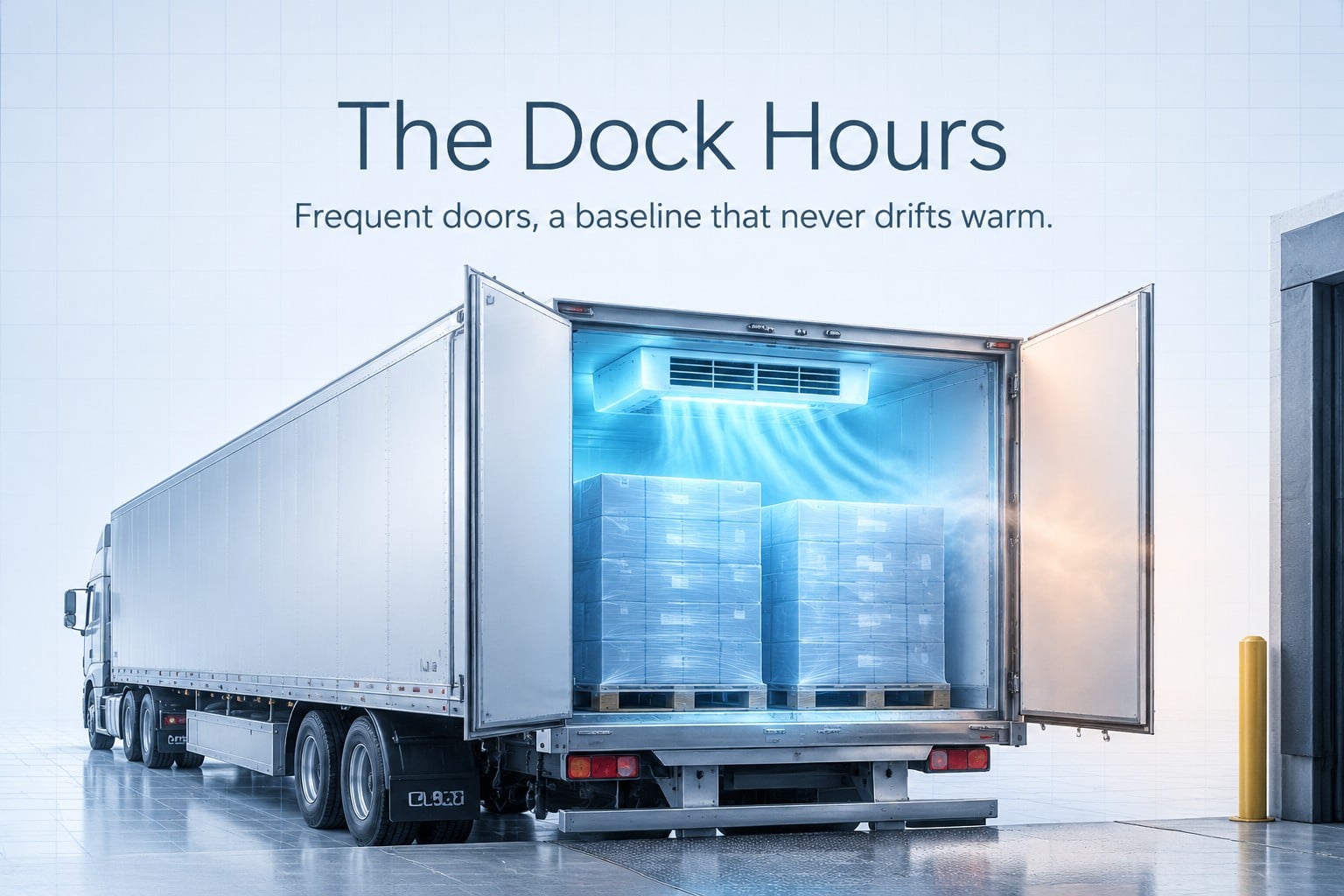
Most excursions in biological transport do not happen at cruising speed on the open road; they happen at the dock, in the last minutes of a stop, when the doors are open and the box is taking in warm air over and over. This is exactly the condition the belt-driven platform is built to absorb. Because the compressor is driven off the engine through a belt, the unit keeps delivering its full cooling duty even while the truck stands idling at a loading bay, so each door opening starts from a stable baseline rather than from a box that has already drifted warm. Pair that with the slim ceiling evaporator that projects a ducted curtain of cold air toward the rear, and the far corner of the pallet stack recovers quickly, before the temperature record shows a real excursion.