EN
EN

Preparing Parking Cooling for the Next Generation of U.S. Fleets
Preparing Parking Cooling for the Next Generation of U.S. Fleets
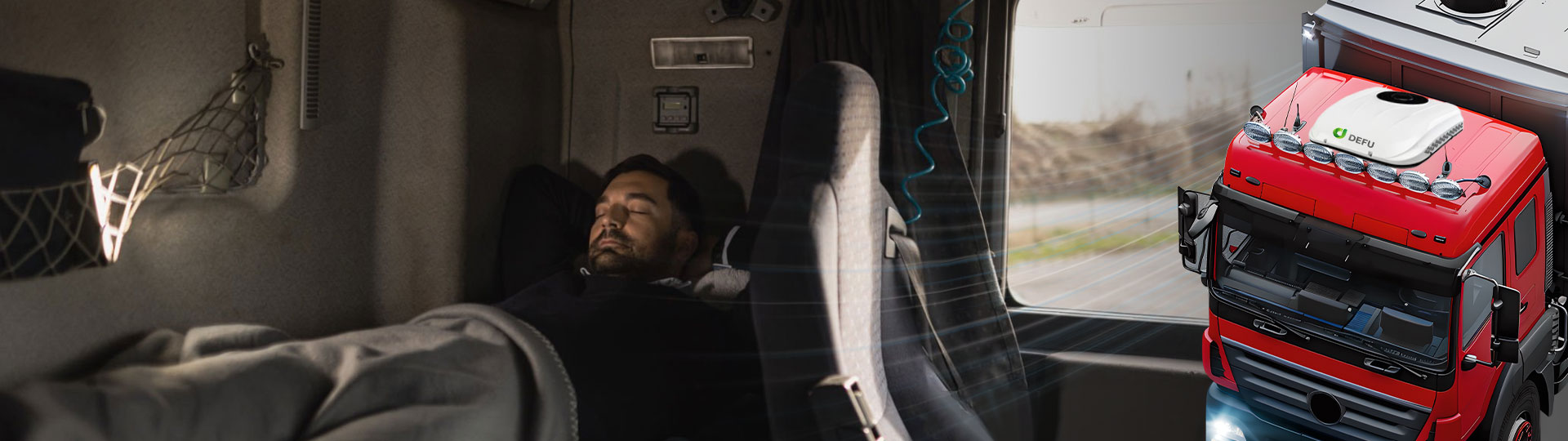
The U.S. long-haul market is raising the standard for parking cooling. The conversation is moving from a simple aftermarket accessory toward a system that must work with the truck’s battery, HVAC architecture, controls, service process, and fleet-management expectations. For buyers, this means the question is no longer only whether a unit can cool a cab. The more important question is whether the solution can fit the operating, technical, and procurement requirements of a modern fleet.
From Stand-Alone Unit to Vehicle System
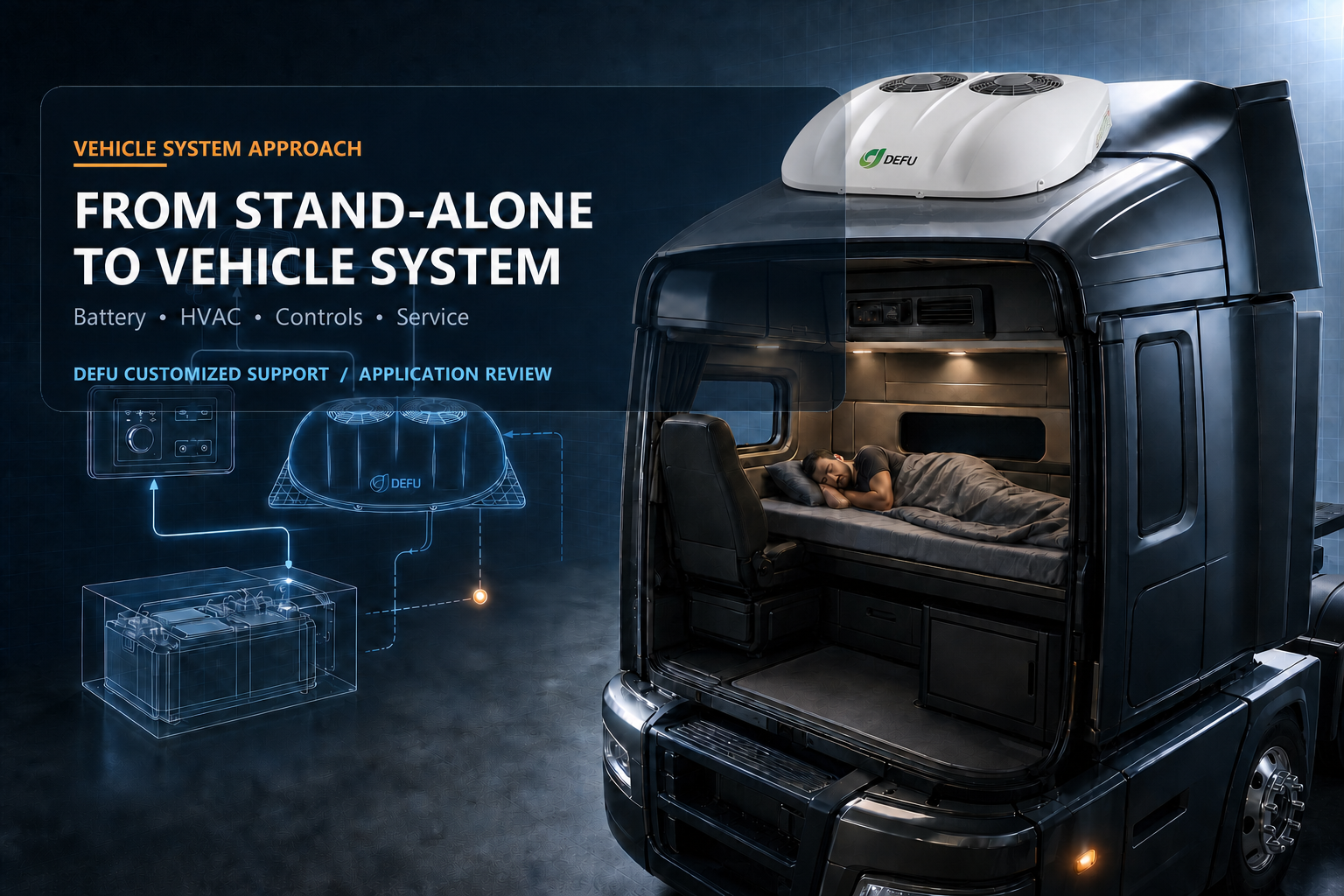
A generic parking air conditioner may be suitable for some retrofit applications, but fleet procurement teams increasingly look for a complete operating solution. They want to understand electrical compatibility, installation quality, low-voltage protection, service procedures, warranty response, spare-parts planning, and the effect on the vehicle’s normal operation. If a system can connect with verified remote-control or monitoring functions, those capabilities may also become part of the evaluation.
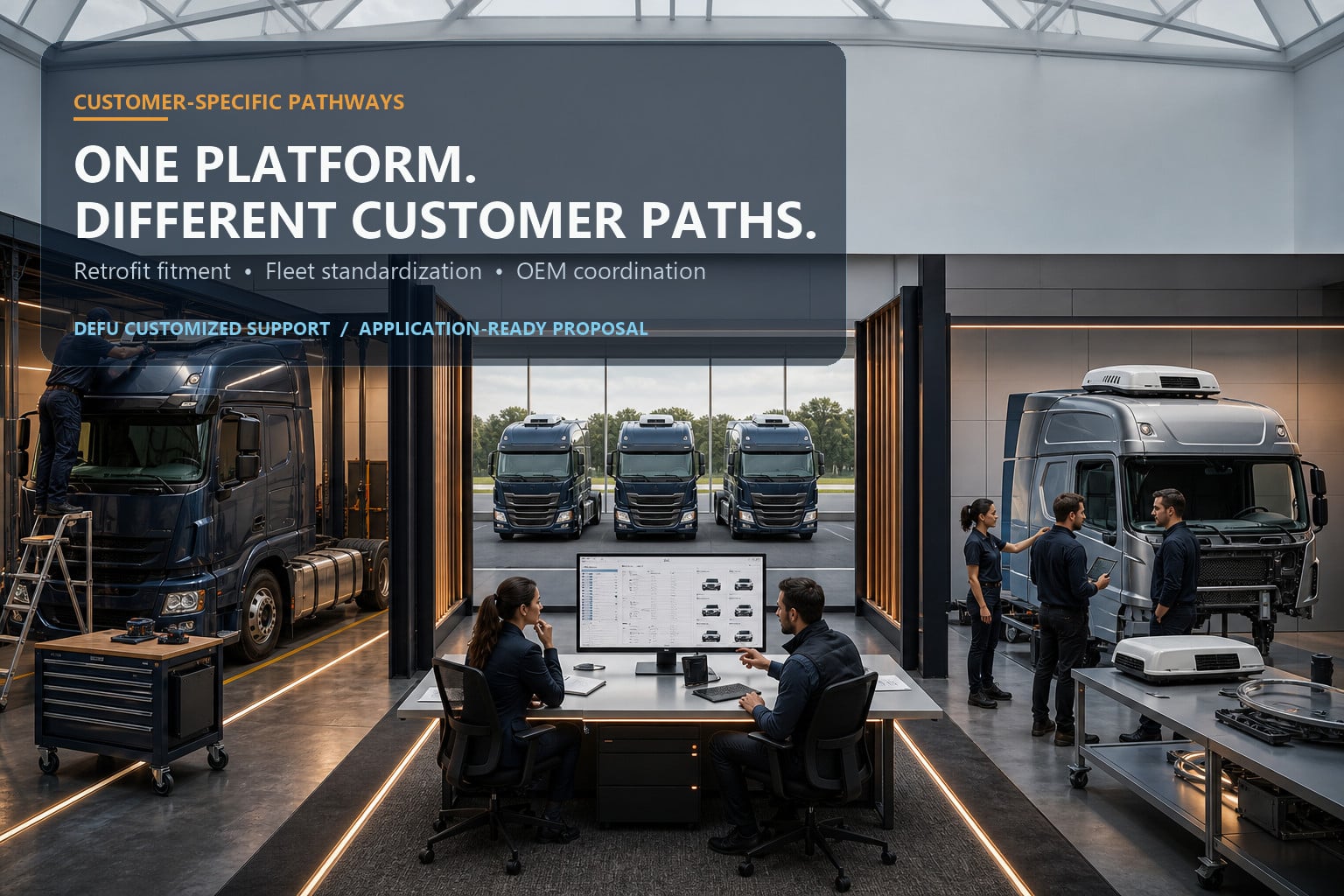
This does not mean every customer needs the same level of integration. A single-truck owner may prioritize installation simplicity and practical control. A regional fleet may prioritize standardization across several truck models. An OEM or body builder may require design coordination, test documentation, validation support, and a defined change-management process. The website should make those paths visible rather than presenting every visitor with the same product pitch.
Procurement Needs Evidence
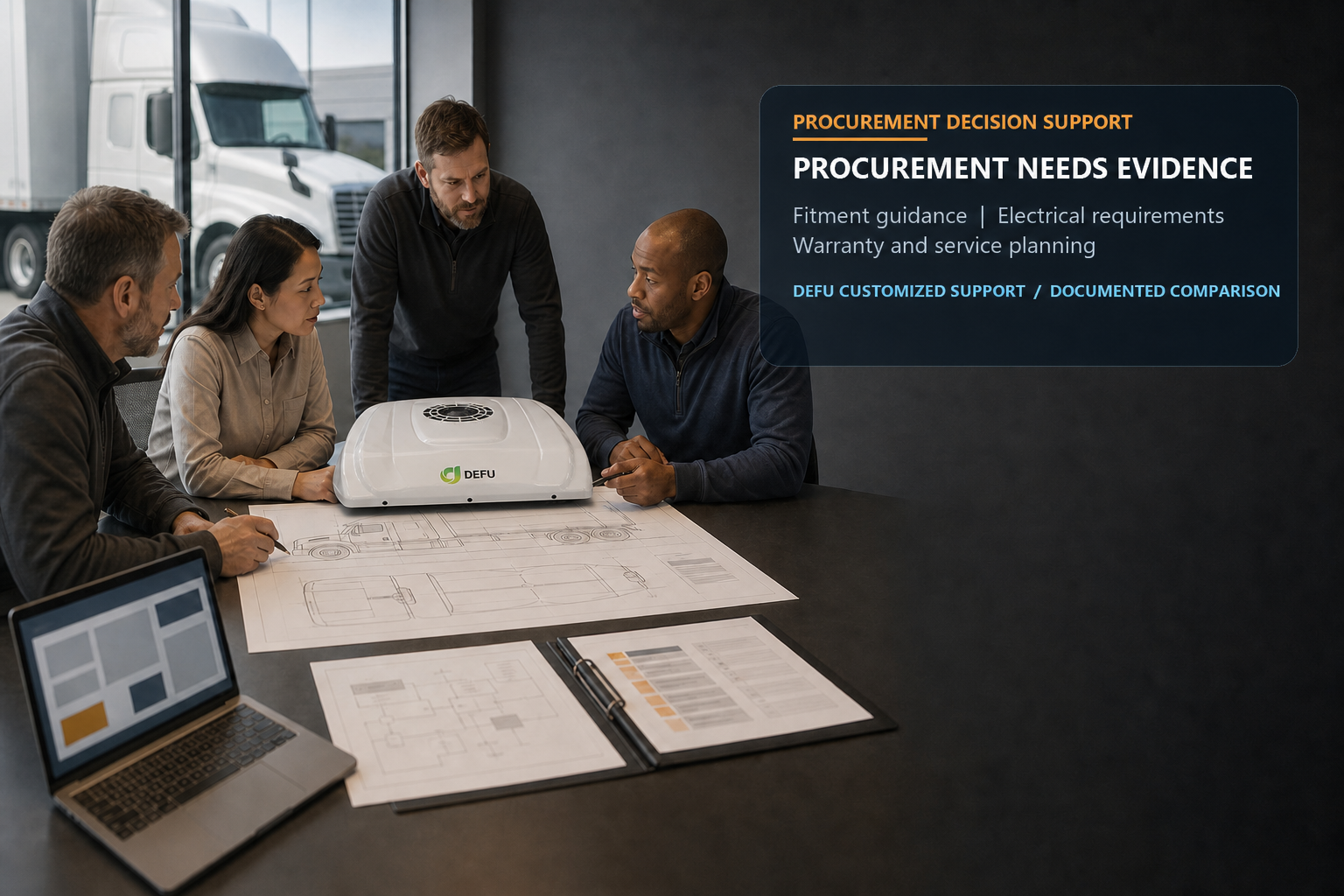
U.S. fleet buyers often need more than a brochure before approving a new cooling solution. They may request product specifications, installation drawings, electrical requirements, test conditions, compliance documentation, warranty terms, service contacts, and an explanation of the expected operating benefits. They may also want to compare the solution with the cost and disruption associated with engine idling or with alternative HVAC architectures.
A credible product page should place evidence next to the decision it supports. Put the voltage and power information beside the fitment guidance. Put the low-voltage protection description beside the battery-use discussion. Put the warranty and service process near the quotation action. If a performance figure depends on ambient temperature, installation method, or test equipment, state that condition clearly. Transparency makes a technical product easier to approve.
Supporting Driver Comfort and Fleet Discipline
Engine-off cooling can serve both the driver and the fleet. The driver receives a more comfortable resting environment, while the fleet gains a tool for managing parked operation more deliberately. The business case should be built from actual duty cycles: where trucks park, how long they remain parked, what climate they encounter, how batteries are maintained, and what local operating expectations apply.
A supplier should not promise a universal fuel-saving number without knowing the fleet’s baseline. Instead, it should help the customer define a measurement plan. Relevant observations may include engine-on versus engine-off rest periods, battery status, fuel use, driver feedback, maintenance events, and system uptime. This turns the purchase into a controlled fleet improvement rather than an unmeasured accessory upgrade.

A Partner for Retrofit, OEM, and Fleet Programs
Our solutions are developed for customers who need more than a catalogue link. We support application review, model selection, technical documentation, installation planning, and commercial follow-up. For retrofit buyers, we focus on fitment and service practicality. For fleet teams, we help organize a repeatable selection and deployment process. For OEM and body-builder projects, we can discuss the information needed for early-stage system evaluation.
If your organization is preparing a U.S. fleet program, share the vehicle platforms, sleeper configurations, operating regions, voltage requirements, annual quantity, and service expectations. We can help you identify the information required for a responsible comparison and move from a general cooling question to a documented, application-ready proposal.