EN

Winter Operation of Truck Parking Air Conditioners: What Changes When Temperatures Drop
Winter Operation of Truck Parking Air Conditioners: What Changes When Temperatures Drop
As outdoor temperatures fall, many fleet managers assume that a parking air conditioner becomes irrelevant until spring. In practice, parked trucks still need active cabin climate management through the cold season, and not only because drivers rest in the cab every night. Cold ambient conditions change how the compressor, refrigerant circuit, battery, and control system behave. A buyer who understands these changes selects a better configuration, installs it correctly, and avoids the warranty disputes that come from unrealistic expectations. This guide explains what actually changes in winter and how fleet and workshop teams should respond.
Why Parking Climate Equipment Still Matters in Winter
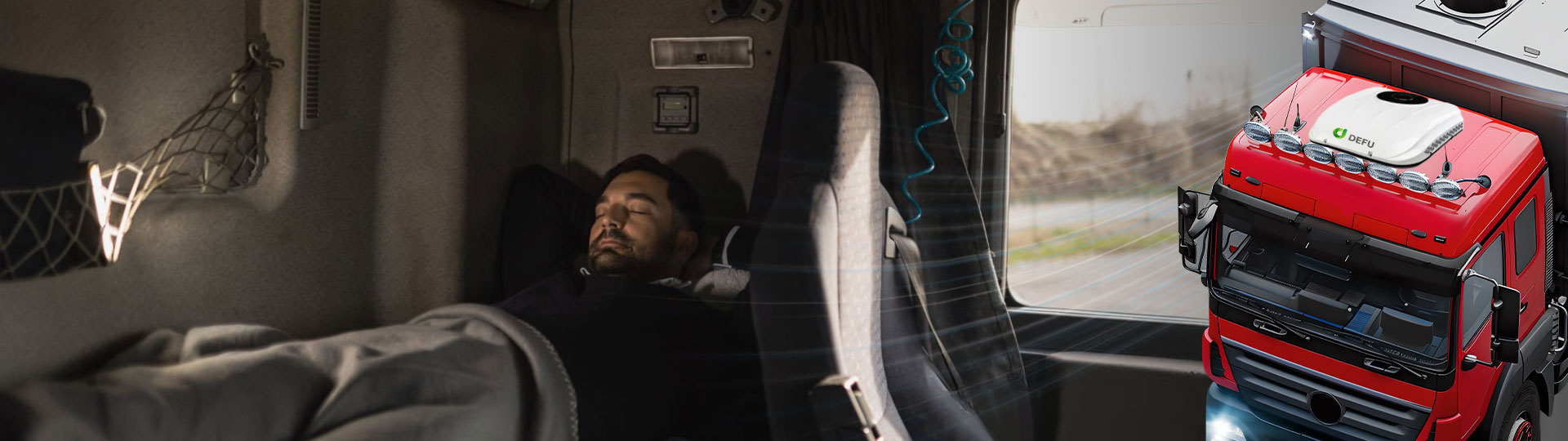
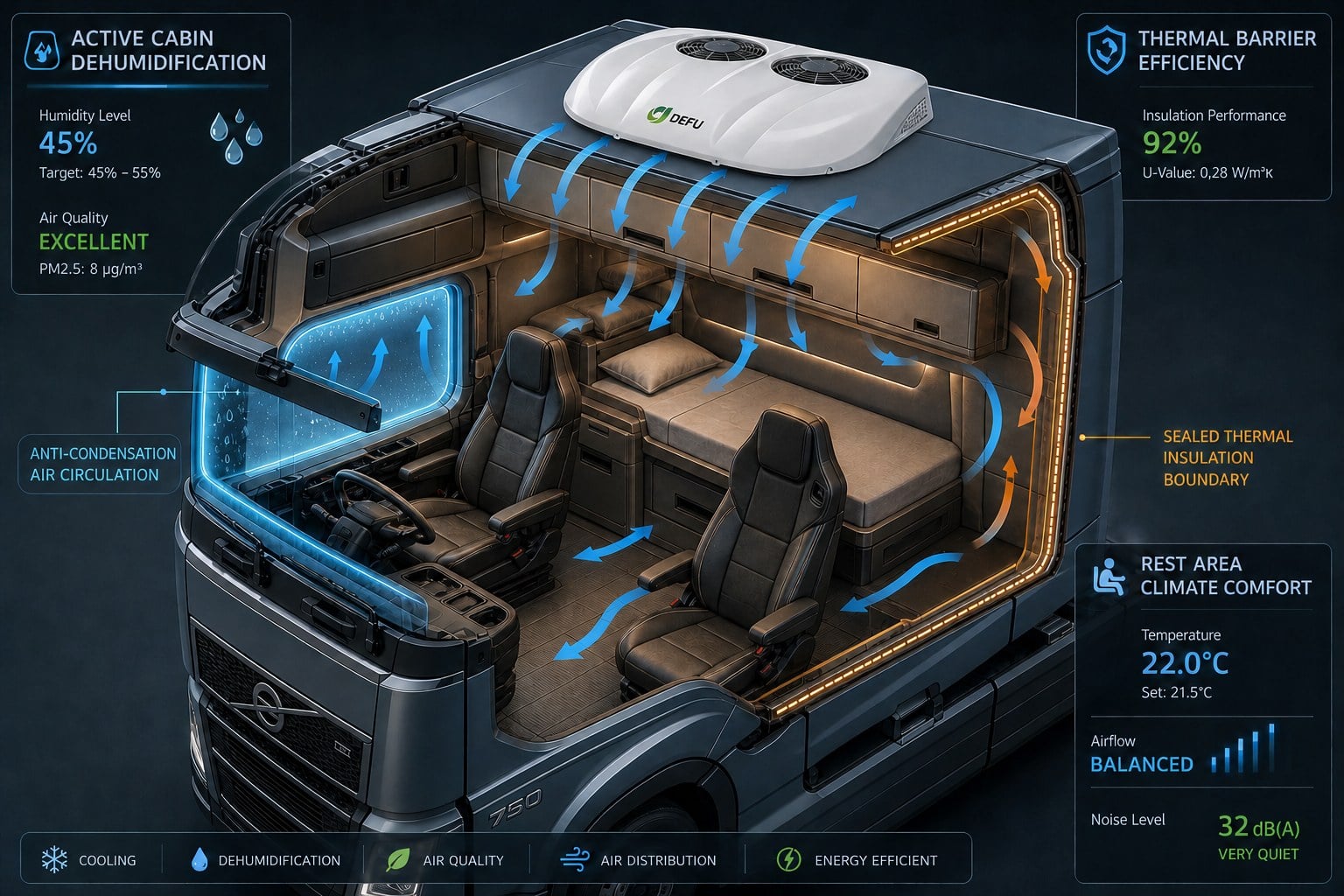
Winter demand is narrower than summer demand, but it is not zero. Drivers on multi-day routes still sleep in the cab with the engine off, and a sleeper that is too cold, too damp, or poorly ventilated produces the same fatigue problems as an overheated cab in July. Ventilation and dehumidification also matter: warm breath inside a sealed cab condenses on cold glazing and metal panels, and a persistently damp sleeper leads to odour, mould, and driver complaints. In markets such as Brazil, Australia, the GCC, and parts of Latin America, high daytime temperatures continue well into the calendar winter, so cooling duty does not stop either. Fleets operating across several climate zones should therefore plan for a unit that works across the year rather than a seasonal accessory.
How Cold Ambient Temperatures Affect Compressor Behavior
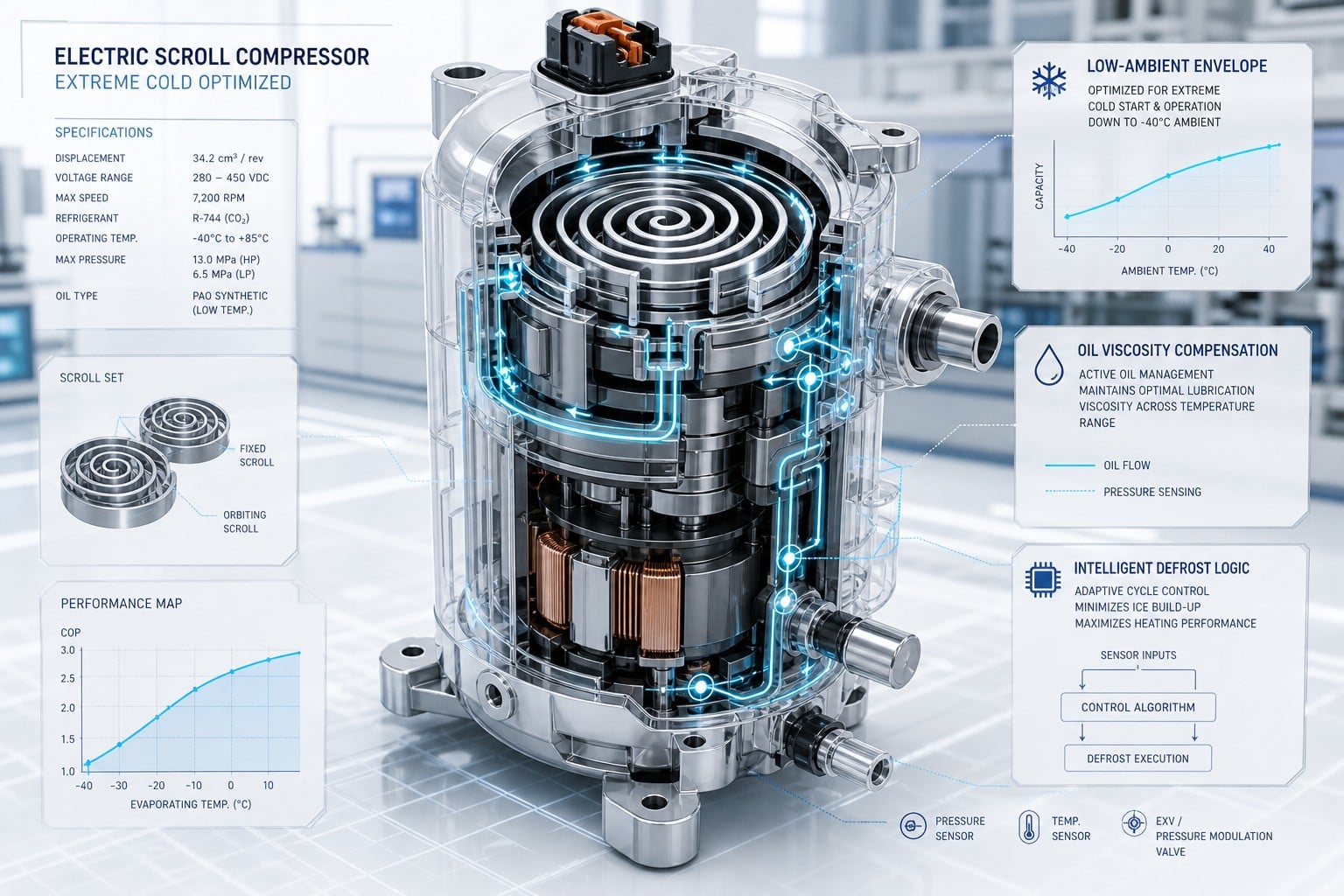
A cold condenser is not automatically a problem. Lower ambient temperature improves heat rejection and can reduce compressor load. The difficulty appears on the evaporator side and in the lubrication system. Suction pressure falls, refrigerant mass flow drops, and some compressors are pushed outside their intended operating envelope. Oil viscosity increases when the unit is cold, which raises startup load on the motor and the electrical system. Units designed for year-round duty therefore need low-ambient control logic, modulated fan speed, or a defined heating mode, whether that is a reverse-cycle heat pump or a supplementary electric heater. Defrost and anti-icing routines also become relevant, because a frosted evaporator blocks airflow and makes the cab feel as if the system has failed.
Battery Performance Falls Before the Temperature Does
The most common winter complaint is not weak cooling but early low-voltage shutdown. Lead-acid and AGM capacity falls significantly at low temperatures, and charging acceptance falls with it, so a battery that comfortably runs the unit for eight hours in September may deliver far less in December. Lithium iron phosphate packs behave differently: they deliver strong output in the cold but require care when charging near or below freezing, which is why a heated or managed battery system matters. Voltage sag under load is the practical issue for installers, because sag at the unit is what the controller actually sees. Winter runtime should be validated by measurement at the unit terminals rather than assumed from the battery label.
Controls and Protection Settings for the Cold Season
Protection thresholds should be reviewed before the first cold night, not after the first complaint. Low-voltage cut-off settings must suit the battery chemistry and the vehicle's charging system, and setpoints should be realistic for the insulation level of the cab. Operating a unit at an extremely low setpoint in an uninsulated sleeper simply holds the compressor at maximum duty and drains the battery faster. Timed ventilation or dry mode can be more useful than aggressive cooling when the goal is a comfortable, dry sleeping environment. Drivers should also understand what a protection shutdown looks like, so that a designed safety event is not reported as a breakdown.
Cabin Insulation, Humidity, and Condensation
Winter exposes every weakness in the cab envelope. Poorly sealed doors, missing curtain gaps, and uninsulated roof panels increase thermal load and push the unit to work harder for the same comfort. Condensation is the visible symptom: moisture collects on the coldest surfaces, and in some cases drains into trim or electrical areas. Insulation upgrades, a proper sleeper curtain, and controlled ventilation often deliver more comfort improvement per dollar than a larger cooling unit. Fleets should treat the cab as part of the climate system rather than as a fixed constraint.
Installation Details That Fail in Winter
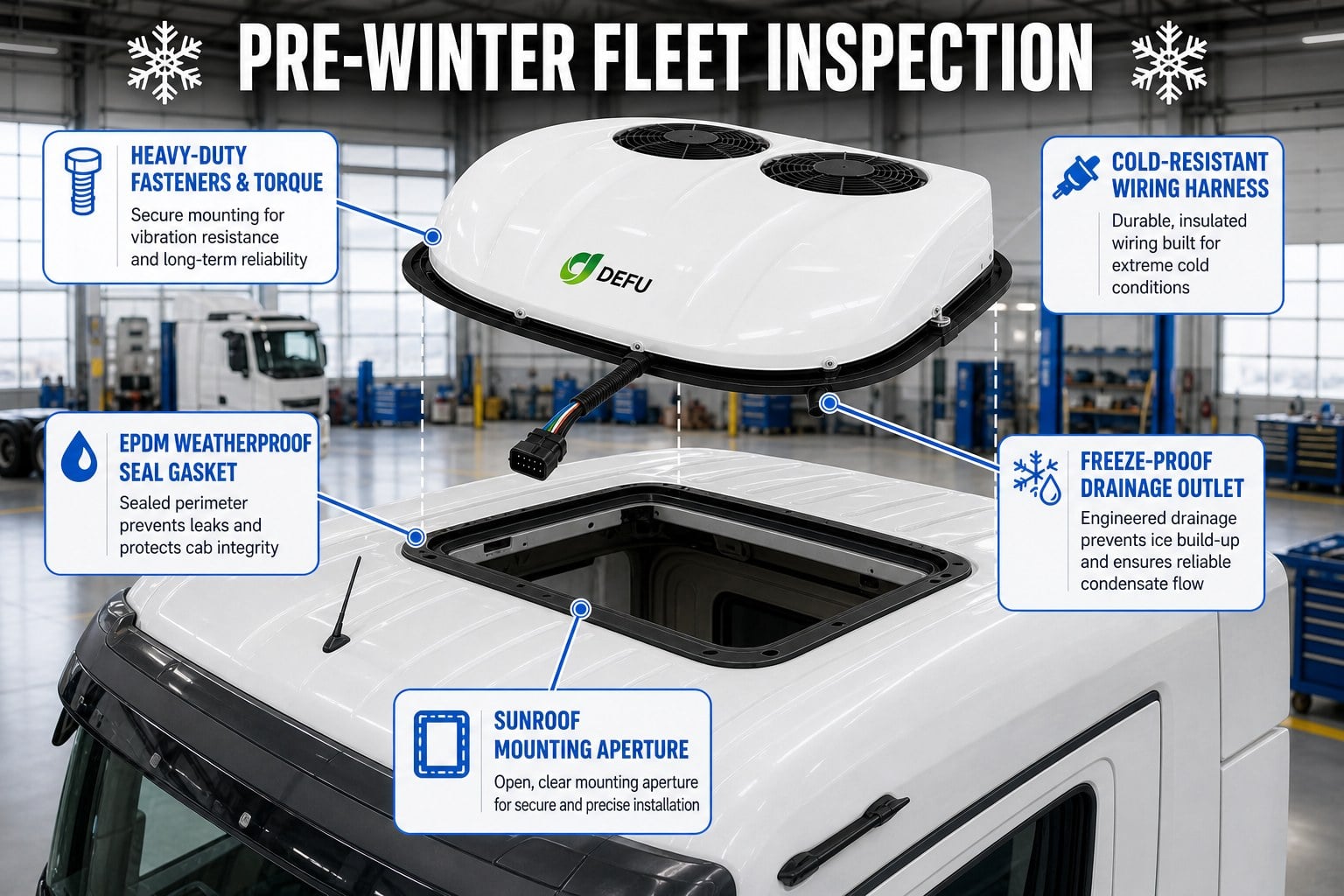
Several installation problems only appear in cold weather. Sealant applied at low temperature may not cure properly, cable sheathing stiffens and cracks when routed without strain relief, and drainage lines that work all summer can freeze and back up. Rooftop airflow can be restricted by snow, ice, or a cover that the driver applies for protection. Filters that were acceptable in autumn become a real restriction when airflow is already reduced by cold, dense air. A pre-winter inspection that covers mounting torque, seals, drainage, cable condition, and airflow clearance prevents most of these failures at very low cost.
Preparing a Fleet for Cold-Weather Operation
The most effective winter program starts in October, while the weather is still mild and workshop capacity is available. Build a vehicle list, test each battery under load, inspect seals and drainage, replace filters, verify protection settings, and confirm that drivers know how to use timers and ventilation modes. Record the results so that next year's schedule can be planned from data rather than memory. Suppliers can support this process with checklists, wiring diagrams, fault-code references, and spare-parts recommendations, which reduces the risk of improvised repairs during a cold snap.
Conclusion
Winter does not end the need for parking climate control; it changes the operating conditions. Compressor envelopes, battery capacity, protection thresholds, cabin moisture, and installation details all behave differently at low ambient temperatures. Fleets that plan for these differences protect driver rest quality, avoid unnecessary downtime, and get more value from every unit they install. Defu supports this process with cold-weather operating guidance, selection support, and documented service information that both fleets and distributors can use.
To review how your fleet would perform in cold weather, send us the vehicle model, nominal voltage, battery type and capacity, and the number of hours you expect to run with the engine off. Our technical team will review the configuration and recommend the settings, kit, and protection thresholds that suit your operating profile.