EN

The Four-Unit Stocking Playbook for Distributors Entering the 4.2 m Box Truck Segment
The Four-Unit Stocking Playbook for Distributors Entering the 4.2 m Box Truck Segment
Distributors lose money in this category in a predictable way: they buy a broad catalogue, find that two SKUs cover most of the demand, and carry the rest as dead inventory while the two that sell run out. The fix is not a bigger order. It is a narrower opening range with a deeper spare-parts bench.
This playbook is for an importer or distributor building a first stocking plan around DEFU's belt-driven refrigeration platforms and hydronic heating range.
Why four SKUs, and which four
The 4.2 m box truck is the most standardized refrigerated vehicle class in most emerging markets: one body length, one common chassis family, one dominant duty cycle of urban and regional distribution with frequent door openings. That standardization is what makes a four-SKU opening range viable.
The four that cover the segment:
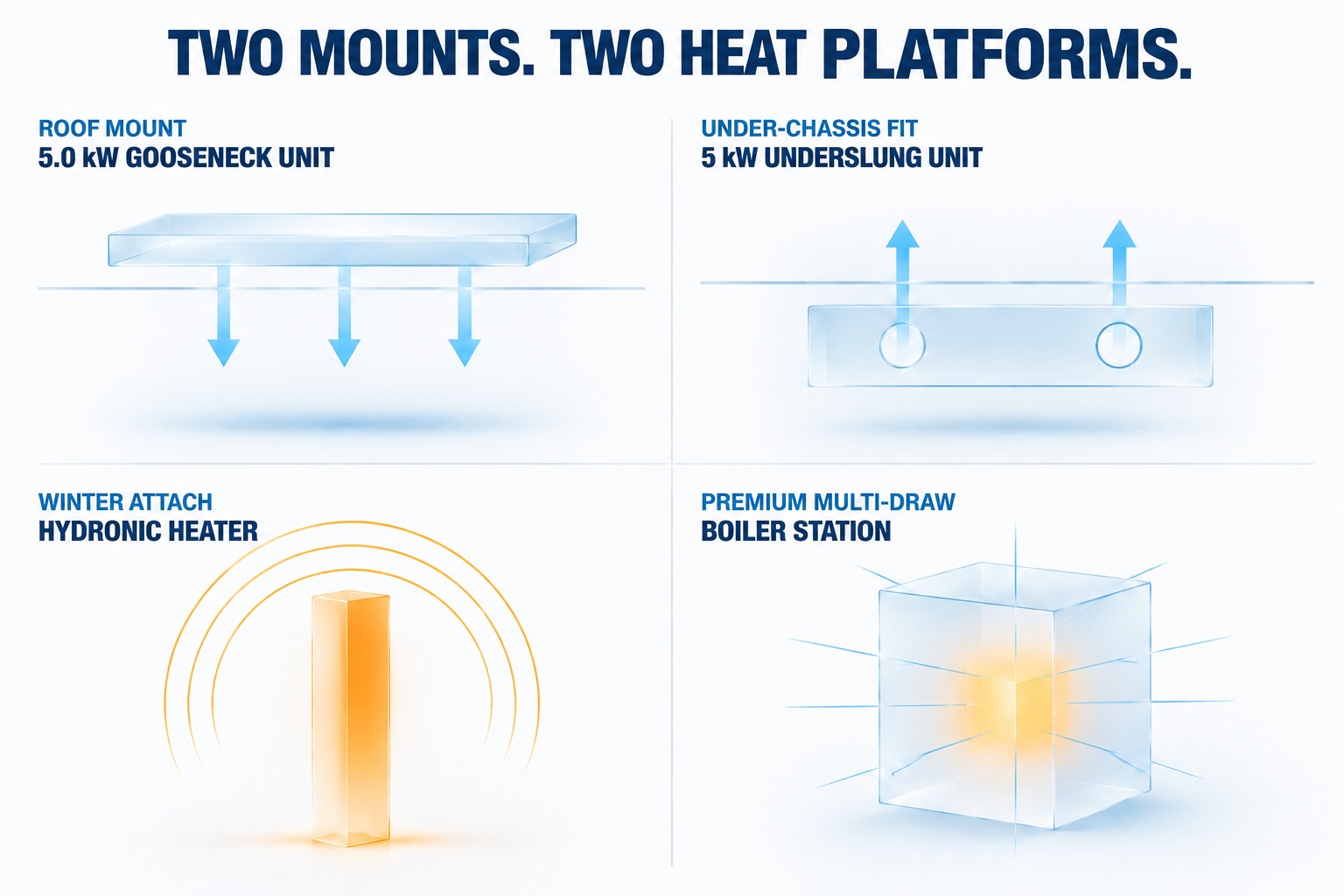
- [5.0 kW Gooseneck unit](https://www.defuairconditioner.com/products/gooseneck-belt-driven-truck-refrigeration-unit-defu.html) — the full-volume option with a slim indoor evaporator and multi-height airflow. Sells to operators who palletize to the roof and to body builders repeating the same box.
- [Underslung unit](https://www.defuairconditioner.com/products/underslung-belt-driven-truck-refrigeration-unit-defu.html) — the retrofit option: 5 kW engine belt compressor, 18 kW condenser, TR45 three-fan blower, R404a, 12/24 V DC control. Sells to workshops fitting trucks already in service.
- [All-in-One Diesel Hydronic Heater](https://www.defuairconditioner.com/products/1040kw-diesel-hydronic-heater-12v-24v-110-220v-defu.html) — the winter attach, a separate heating unit: 10–40 kW, integral fuel-water tank, brazed plate exchanger, dual voltage.
- [Enclosed Boiler Station](https://www.defuairconditioner.com/products/1640kw-enclosed-diesel-hydronic-thermal-boiler-station.html) — the premium and multi-draw option: 16 kW, 20 L diesel, 50 L coolant, cabinet enclosure, for depots, containers and workshops.
Two mounts cover the box, two heat platforms cover the season.
Sizing the opening order
Split by mount, not by model. If your market retrofits more than it builds, weight underslung; if it has three or four serious body builders, weight gooseneck. Do not carry both at equal depth in year one.
Carry heat at the ratio your climate dictates. A market with a real winter attaches heating to a large share of reefer sales; a tropical market attaches almost none. Never stock a unit without its spare-parts kit — one truck down for a $12 part and a three-week shipment is how an account is lost.
The spare-parts list that decides your reputation
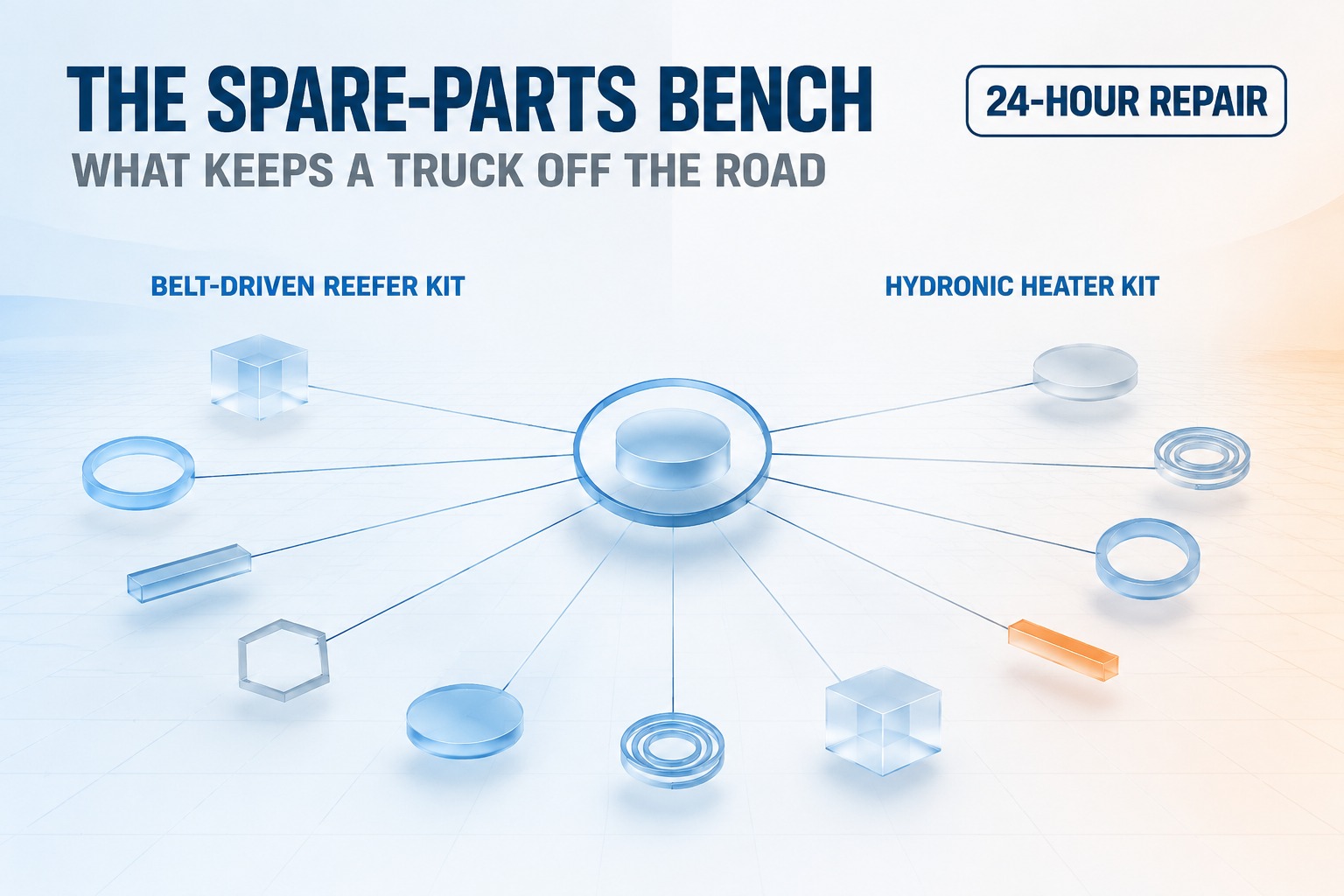
For belt-driven reefers, the failures that stop a truck are almost always consumables: belts and tensioner hardware, receiver drier and filter, sight glass, expansion valve, oil separator service parts, blower motor and fan blades, controller and harness, and R404a with service fittings.
For hydronic heaters the equivalent list is igniter or glow plug, fuel pump, flame sensor, water pump, and the plate exchanger gasket set. A distributor holding these can promise a 24-hour repair, and that promise is worth more than a five percent price advantage.
Service capability is the real product
Both product families fail in diagnostic-ambiguous ways: a blocked coil looks like a low charge, and air in a coolant loop looks like a failed heater. Your margin depends on technicians telling the difference.
Buy one training unit and keep it as a demo with the circuit open and every component labelled. Train on the sight glass and the controller, two of the highest-value diagnostic tools in the system. Standardize the acceptance test across every install and document it with photos. Then log every failure by symptom rather than by part; after twenty units you will know your market's failure profile.
What not to compete on
Price-led positioning loses to availability and documentation in this segment. Three things justify a premium and cost a supplier almost nothing: a mounting drawing with dimensions before the order, a wiring diagram with pinout in the box, and a written pull-down performance statement you can put in a tender. If your supplier cannot provide them, your competitor's can, and the conversation becomes about price by default.
A first-year sequence that reduces risk
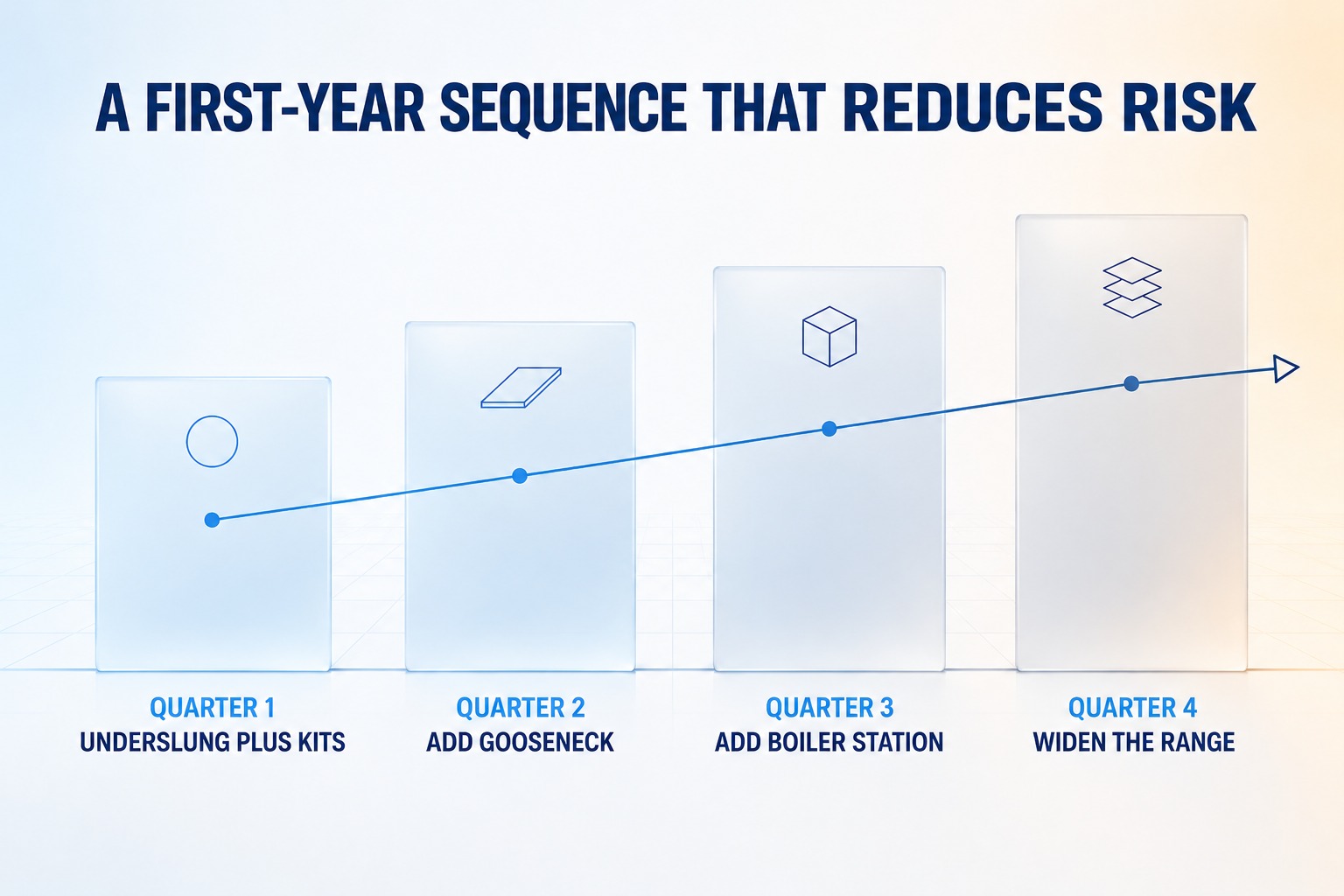
Quarter one: underslung units plus spare kits, with one hydronic heater as a demo. Quarter two: add gooseneck once a body builder has validated the drawing, and add heating stock based on the actual winter attach rate rather than a guess. Quarter three: add the boiler station for depot and container enquiries, lower-volume, higher-margin sales. Quarter four: review the failure log, adjust the spare-parts mix, and only then widen the unit range.