EN

The Practical Homeowner & Builder Guide: Why Modern Off-Grid Cabins, Pousadas, and Adventure Rigs Are Switching to Diesel Hydronic Heating
The Practical Homeowner & Builder Guide: Why Modern Off-Grid Cabins, Pousadas, and Adventure Rigs Are Switching to Diesel Hydronic Heating
A deep dive into real-world energy savings, silent radiant warmth, instant domestic hot water, and how to eliminate propane and electric grid vulnerability once and for all.
|
PRACTICAL GUIDE & ENERGY INSIGHTS |
The Real Cost of Keeping Warm: Why Traditional Heating Fails in Remote and Extreme Climates
Anyone who has spent a winter living outside major metropolitan gas grids knows the anxiety of keeping a home or retreat comfortably warm. When freezing temperatures settle in, keeping indoor spaces cozy and water lines thawed becomes a daily logistical chore.
For decades, rural homeowners and travelers had to choose between three imperfect options. Electric resistance heating seems convenient, but it consumes vast amounts of kilowatts, quickly draining off-grid solar batteries and creating shocking utility bills during peak winter tariff periods. Propane gas systems require regular hauling of heavy, expensive cylinders that lose pressure or freeze up when temperatures plummet. Firewood stoves provide rustic charm, but they cannot heat your morning shower, require constant physical feeding, and leave rooms freezing cold by 4:00 AM.
Today, a quiet energy revolution is taking place across mountain communities, rural farmsteads, and custom overland builds. Homeowners and contractors are turning to all-in-one diesel hydronic heating systems — a technology trusted for decades in harsh maritime and commercial transport environments, now refined into a sleek, plug-and-play residential appliance.
Real-Life Stories: Three Families Who Solved Their Winter Heat Dilemma
Case 1: The High-Altitude Mountain Cabin & Eco-Lodge
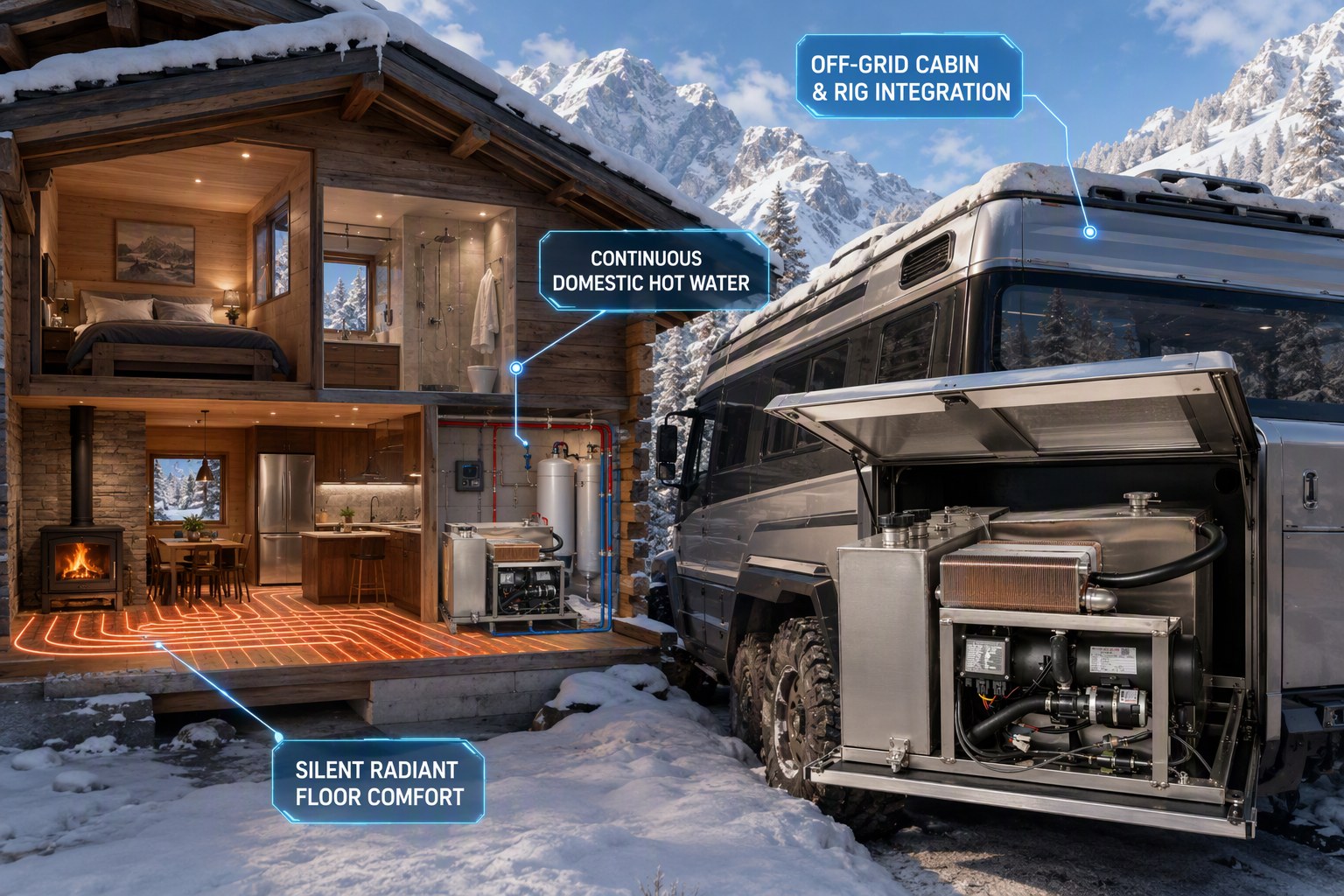
Mark and Elena run a boutique guest cabin in a mountain region prone to heavy snow and frequent winter power cuts. Previously, guest complaints were frequent: hot water ran out after the first morning shower, and noisy electric wall blowers kept guests awake at night. After installing a 30kW All-in-One Diesel Hydronic unit tied into radiant floor loops, their entire 250 m² lodge now stays consistently warm at 22°C. Guests enjoy unlimited steaming hot showers from the instant plate heat exchanger, and the lodge operates completely untethered from fragile power grid lines.
Case 2: The Solar Farmstead Seeking True Rainy-Day Security
On rural properties with solar thermal rooftop collectors, sunny summer months provide abundant free hot water. However, when cold winter rains and heavy cloud cover linger for two weeks, electric auxiliary backup elements can double a household's electricity bill. By integrating a 16kW diesel hydronic unit as an automatic thermal backup, the system detects temperature drops in the solar reservoir and automatically supplies clean, low-cost heat without overloading the home battery bank.
Case 3: The Custom Luxury Bus Conversion (Overlanding Without Compromise)
David spent two years converting a commercial coach into a full-time luxury mobile home. Space and safety were his top priorities. Carrying heavy LPG tanks inside a vehicle created dangerous explosion hazards and required hunting down different gas fittings across international borders. By installing the 12V/24V all-in-one diesel hydronic system in the underbelly luggage compartment, David pulls fuel directly from the main vehicle diesel tank. He enjoys warm radiant floors, rapid windscreen defrosting via the 6-port air blower, and endless residential showers at any remote campsite.
Why Diesel Hydronic Heating Makes Financial and Practical Sense
When comparing heating systems, looking beyond the initial purchase price reveals significant long-term lifestyle and economic advantages:
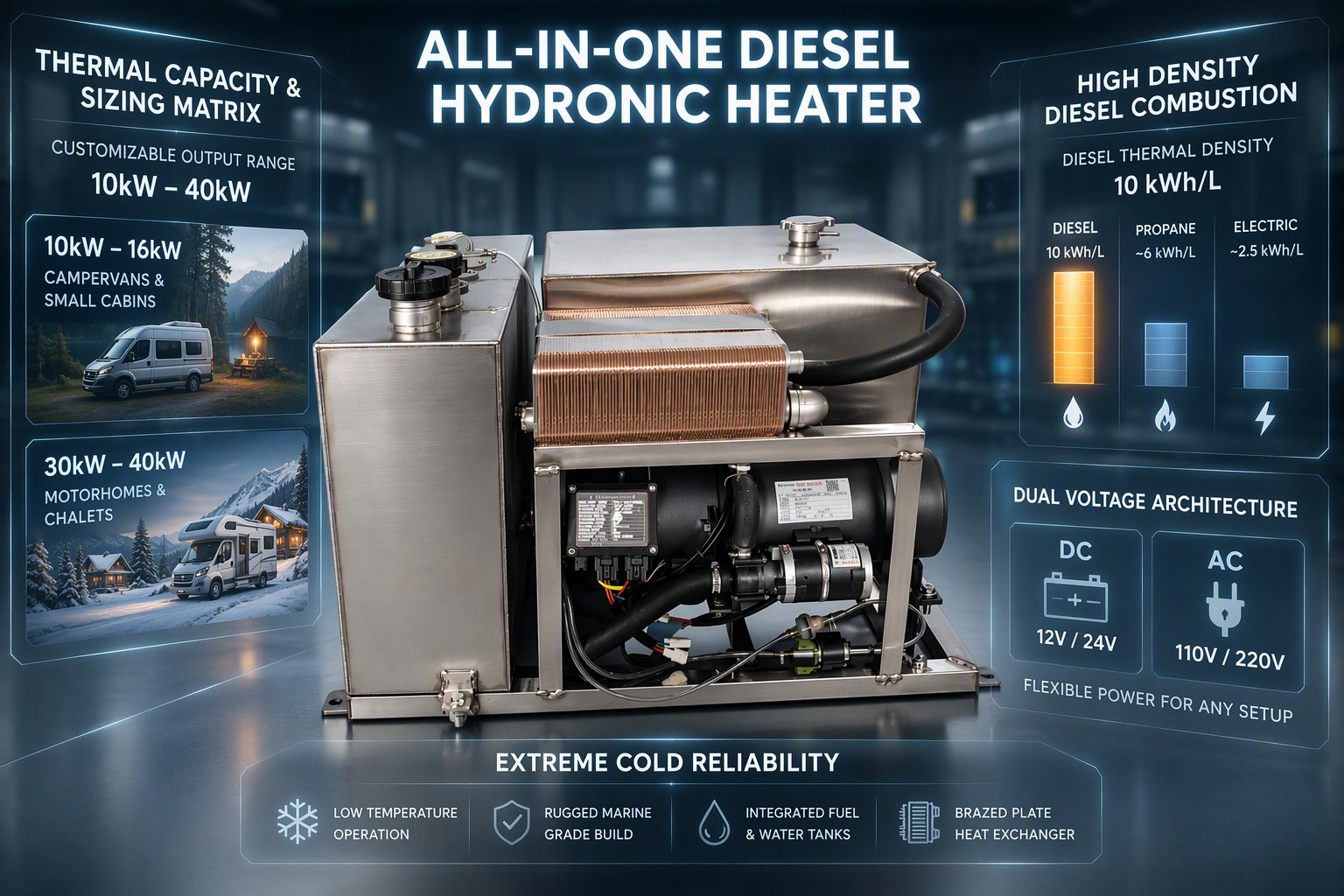
- Diesel Energy Density & Global Availability: Standard automotive diesel packs approximately 10 kWh of thermal energy per liter. It is available at every service station worldwide, stores safely without high-pressure tank hazards, and does not vaporize or freeze under normal winter storage conditions.
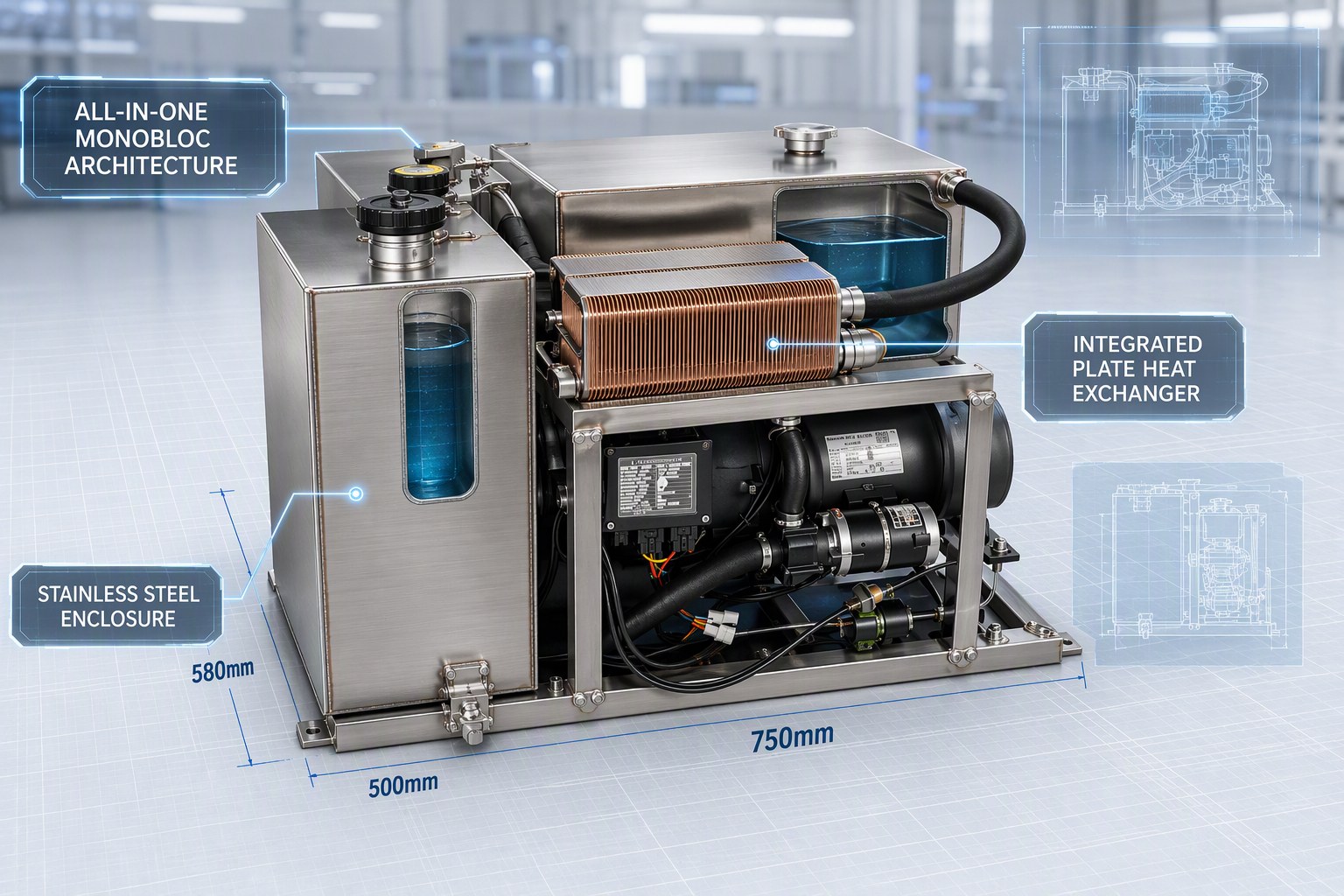
- Instant Heat Transfer Without Massive Water Cylinders: The integrated copper-brazed plate heat exchanger eliminates the need for bulky 200-liter hot water tanks that take up valuable room and radiate heat loss 24 hours a day. Heat is produced instantly on demand only when you turn on the faucet.
- Rugged All-in-One Stainless Steel Enclosure: Rather than mounting separate pumps, expansion vessels, valves, and fuel cans on a wall with exposed plumbing, this compact monobloc unit (750 × 580 × 500 mm) houses everything inside corrosion-proof, laser-welded stainless steel. It is built to last decades without rusting or leaking.
- Dual-Voltage Electrical Architecture: Engineered to run seamlessly on either 12V/24V DC battery systems (ideal for vehicles and off-grid solar setups) or standard 110V/220V AC household outlets, offering total flexibility for both mobile and fixed installations.
- Intelligent Multi-Zone Climate Management: Combine silent underfloor hydronic circuits in living areas with the powerful 6-outlet forced-air evaporator core for rapid morning warmup in entryways, garages, or vehicle cabs.
- User-Centric Digital Operation: Featuring a crystal-clear digital LCD controller with voice prompts and a 100-meter wireless remote control, you can start or adjust your heating with a single click from the comfort of your bed.
How to Choose the Right Capacity for Your Project
Selecting the ideal heating capacity ensures maximum fuel efficiency and rapid thermal response. Here is a practical guideline based on typical real-world installations:
- 10 kW – 16 kW Models: Ideal for campervans, expedition trucks, small mountain cabins, and auxiliary solar backup systems up to 120 m² of heated living space.
- 30 kW – 40 kW Models: Engineered for full-scale luxury bus conversions, multi-bedroom country homes, rural farmhouses, and commercial boutique chalets ranging from 180 m² to over 400 m².
Conclusion: Experience True Warmth Without Compromise
Winter should be a season of comfort and relaxation, not a battle against high utility bills and frozen pipes. By bringing together radiant floor heating, instant domestic hot water, and rugged diesel reliability in one smart package, the All-in-One Diesel Hydronic Heating System delivers the freedom, luxury, and peace of mind you deserve.
CONSULT WITH OUR HEATING EXPERTS
Planning a new home build, off-grid retreat, or vehicle conversion? Get in touch with our application engineers today for free system sizing, technical layout guidance, and direct factory pricing.