EN
EN


How to Improve Truck Parking Air Conditioner Runtime Before Cold-Season Routes
How to Improve Truck Parking Air Conditioner Runtime Before Cold-Season Routes
A truck parking air conditioner is often judged by one practical question: how long can it keep the sleeper cab comfortable while the engine is off? The answer is not determined by the air conditioner alone. Battery capacity, battery condition, cab insulation, ambient temperature, set temperature, wiring quality, airflow, and driver operation all influence runtime. Before the autumn-to-winter route season, fleets should review the entire stationary-cooling system instead of replacing equipment without identifying the real cause of short runtime.
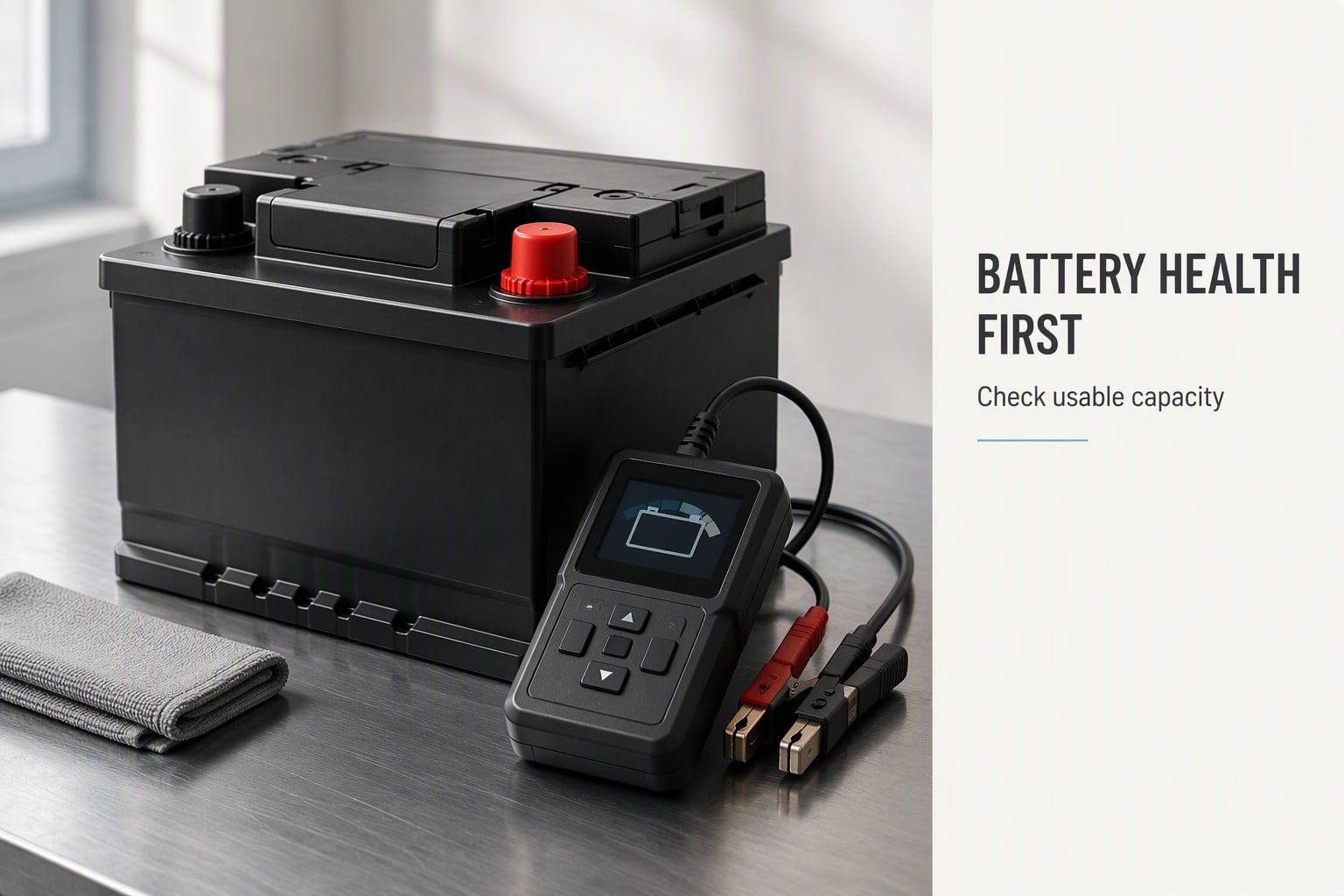
Begin with the battery. A battery may show an acceptable voltage at rest and still have reduced usable capacity because of age, heat exposure, repeated deep discharge, or poor charging. Workshops should inspect state of health, terminal condition, charging performance, and any history of low-voltage protection. If the auxiliary battery is shared with other accessories, record the total electrical load rather than assigning all consumption to the parking air conditioner.
The next step is to define the expected operating condition. A unit operating in a well-insulated sleeper cab on a mild night may run differently from the same unit cooling a sun-heated cab during a warm afternoon. Record outside temperature, target temperature, fan setting, door-opening frequency, parking location, and operating hours. A runtime estimate without these conditions may look precise but will not help a fleet make a reliable decision.
Cab insulation has a direct effect on stationary cooling. Damaged door seals, open curtains, uncovered windows, roof heat, and frequent door opening can increase the cooling load. Drivers can improve performance by closing the sleeper curtains, checking seals, keeping the return-air path clear, and avoiding unnecessary opening of the cab. These simple actions do not replace a correctly sized product, but they can reduce avoidable energy loss.

Airflow also affects energy use. Dirty filters restrict circulation and may force the unit to work harder. A blocked condenser or restricted outdoor-air path can reduce heat rejection. Inspect filters, condenser fins, inlet areas, and interior supply outlets according to the maintenance schedule. Do not place luggage or other objects over the return-air opening. A product page can turn these points into a seasonal “runtime checklist” that supports both SEO and customer education.
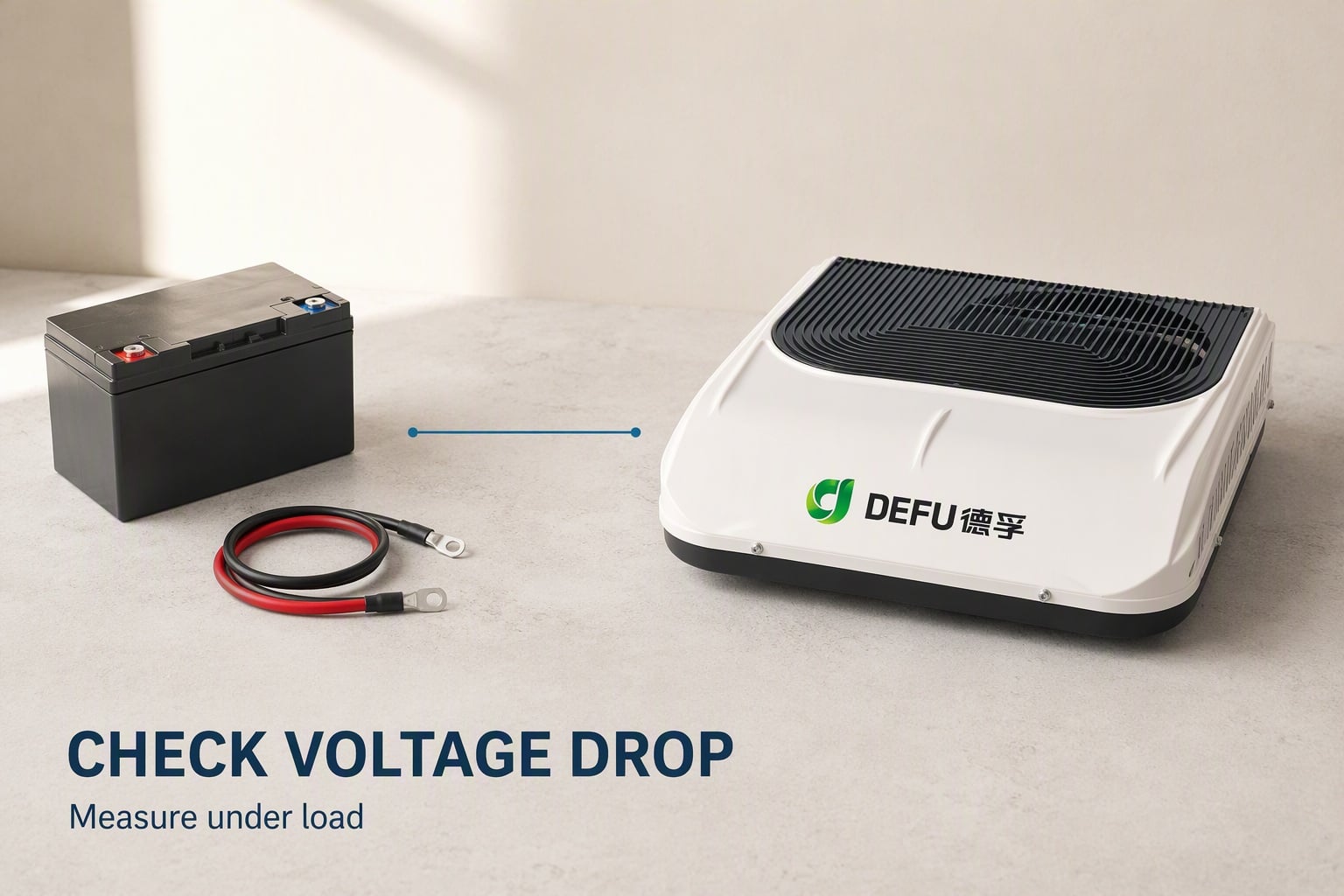
Wiring quality is another common source of lost performance. Undersized cables, long cable runs, loose terminals, poor grounding, and damaged connectors create voltage drop. The controller may interpret the reduced voltage as a low-battery condition and shut down earlier than expected. Measure voltage at the battery and at the air conditioner during operation. If the difference is significant, the workshop should correct the electrical installation before changing the product.
Charging strategy should match operating patterns. A fleet that expects long stationary-cooling periods needs a realistic plan for restoring battery capacity. This may involve alternator charging, an approved auxiliary charger, solar assistance, or scheduled workshop charging, depending on the vehicle and application. Any charging modification must be compatible with the vehicle electrical system and battery type. Product communication should describe the required conditions without promising a universal runtime.
Fleet managers can improve decision quality by using a simple monitoring sheet. Record vehicle number, battery age, nominal voltage, starting battery or auxiliary battery arrangement, parking air conditioner model, stationary-cooling hours, protection events, and driver comments. Compare similar vehicles rather than mixing different cab types and climate conditions. The data can reveal whether the main issue is battery deterioration, installation, usage behavior, or product sizing.
Autumn is an ideal time to complete this work because demand for stationary cooling may be lower than in peak summer while winter route planning is underway. Workshops can replace weak batteries, clean filters, inspect cables, and train drivers before the next warm-weather cycle. Distributors can promote a “pre-season runtime audit” rather than a discount-only campaign.
Conclusion
Improving truck parking air conditioner runtime requires a complete system approach. Battery health, insulation, airflow, wiring, charging, and driver operation all matter. By helping customers measure real conditions and correct avoidable losses, Defu can present its parking air conditioner as a reliable engineering solution and build stronger trust with international fleets.