EN
EN

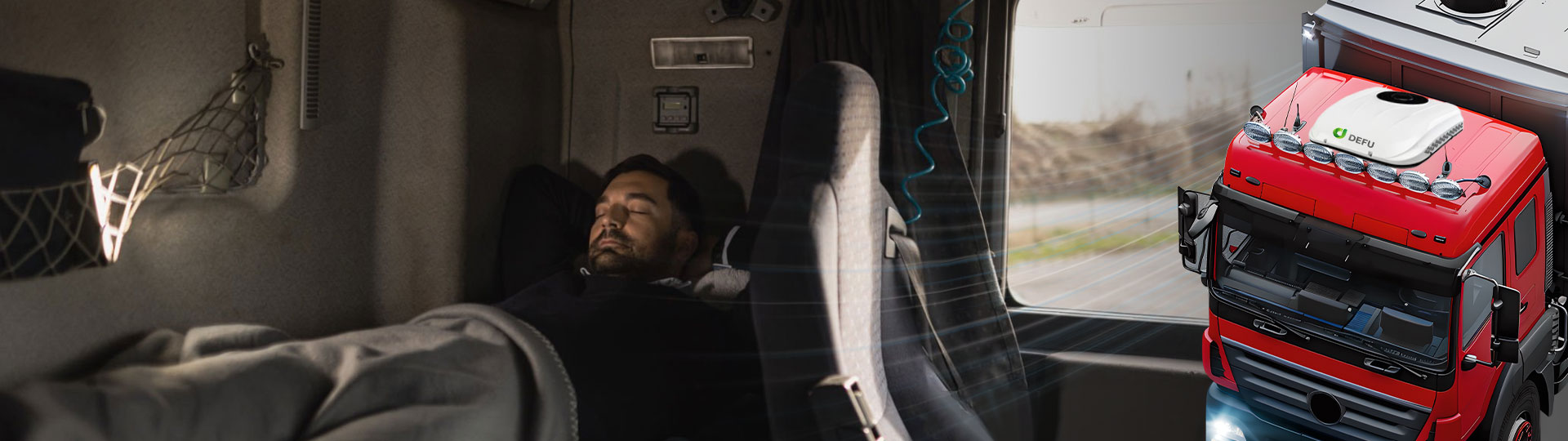
Autumn No-Idle Comfort: Why Long-Haul Fleets Need a Dedicated Truck Parking Air Conditioner
Autumn No-Idle Comfort: Why Long-Haul Fleets Need a Dedicated Truck Parking Air Conditioner
October is a practical planning month for long-haul fleets. Daytime temperatures may still be uncomfortable in many routes, while nights become cooler and drivers spend more time resting between delivery schedules. This changing pattern makes a dedicated truck parking air conditioner valuable. It allows a driver to cool the sleeper cab while the truck is parked, without depending on continuous engine idling for comfort.
A parking air conditioner is different from a standard vehicle air-conditioning system. A conventional system normally depends on the engine-driven compressor, so it is designed to operate while the vehicle is running. A parking unit is designed for stationary use and uses an independent electrical supply. This difference changes the installation requirements, the battery calculation, and the way the product should be evaluated. Fleet managers should look at the complete stationary-cooling system rather than comparing only the headline cooling capacity.
The first benefit is a more predictable rest environment. A driver may stop at a service area, loading yard, or roadside rest location for several hours. If the sleeper cab becomes hot, the driver may otherwise restart the engine simply to operate the original vehicle air conditioner. A dedicated parking unit provides another option. It can circulate conditioned air during the rest period while the engine remains off, subject to the available battery capacity and operating conditions.
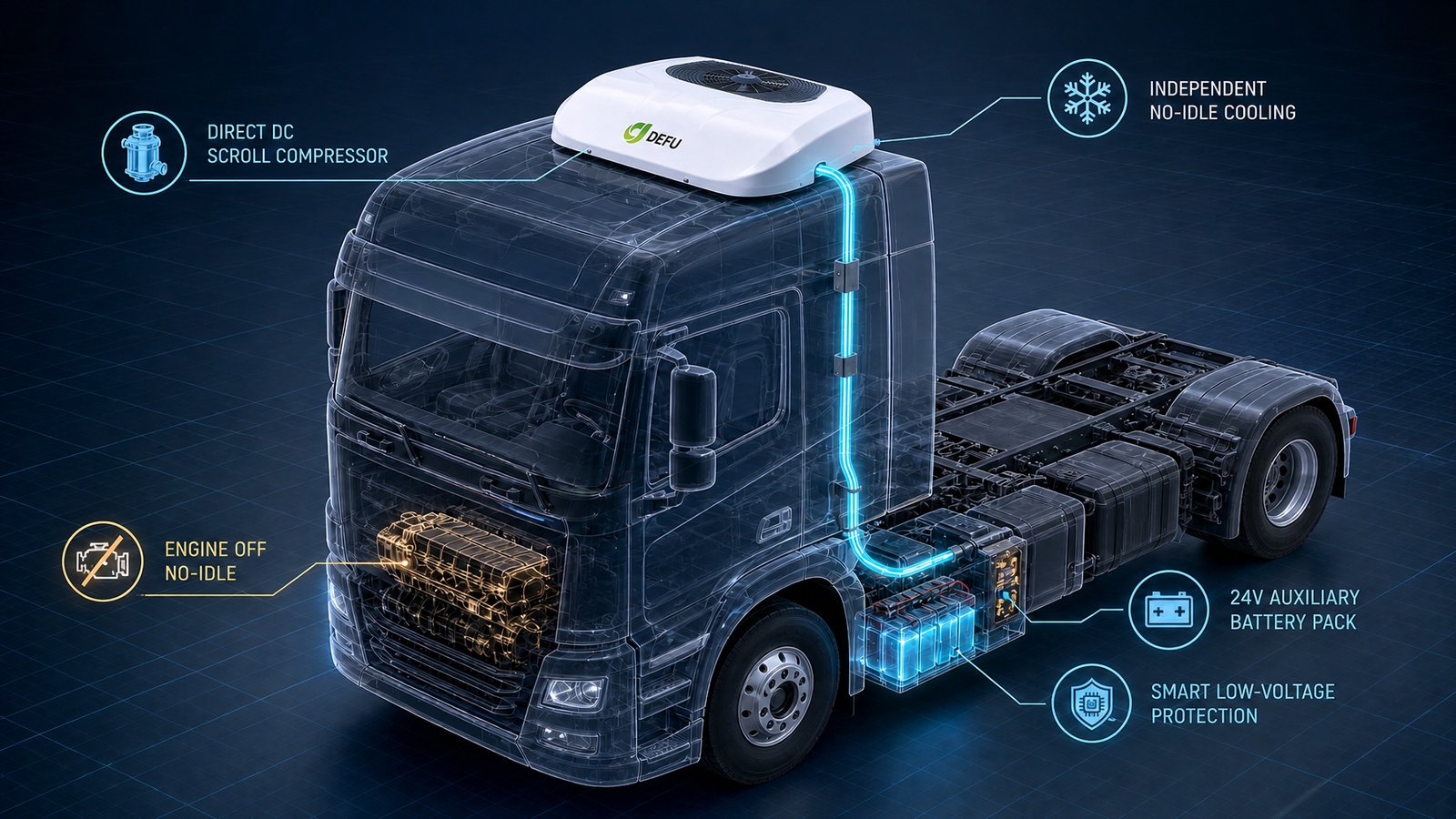
The second benefit is operational discipline. Unnecessary idling can create fuel consumption, noise, and additional engine hours. A parking air conditioner does not eliminate every reason a truck may need to run, and it should never be promoted with unsupported savings figures. However, it can reduce the need to idle solely for cabin cooling. A credible fleet program should measure baseline idle hours, battery performance, runtime, and driver usage before claiming an operating benefit.
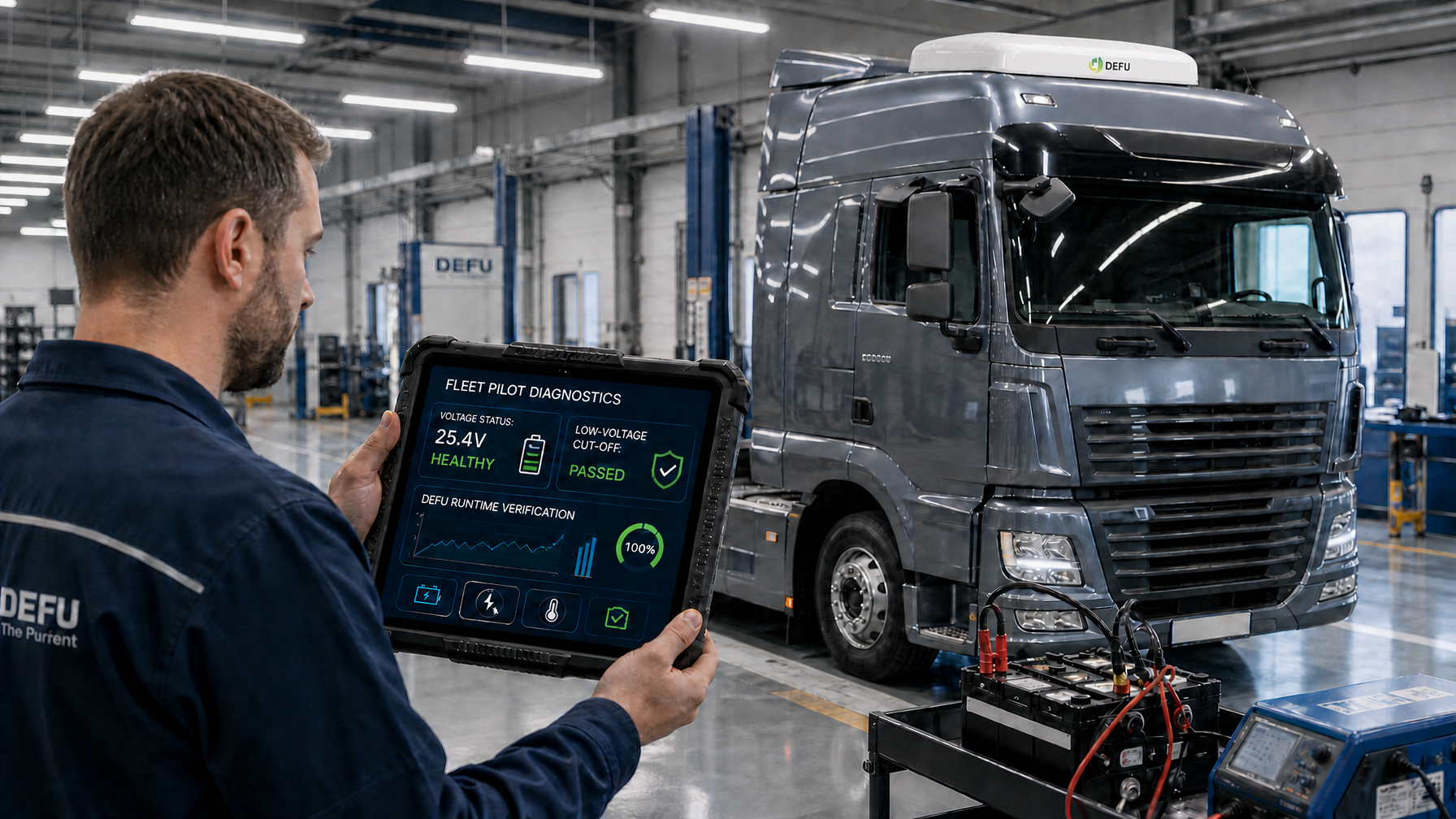
Autumn is also the right time to inspect the electrical system. A parking unit may perform well in a product test but stop early if the auxiliary battery is aged, undersized, or poorly connected. Workshops should check battery state of health, terminal condition, cable size, fuse protection, grounding, voltage drop, and charging performance. The expected runtime should be calculated from actual conditions: outside temperature, insulation, set temperature, cab size, door opening frequency, and battery capacity.
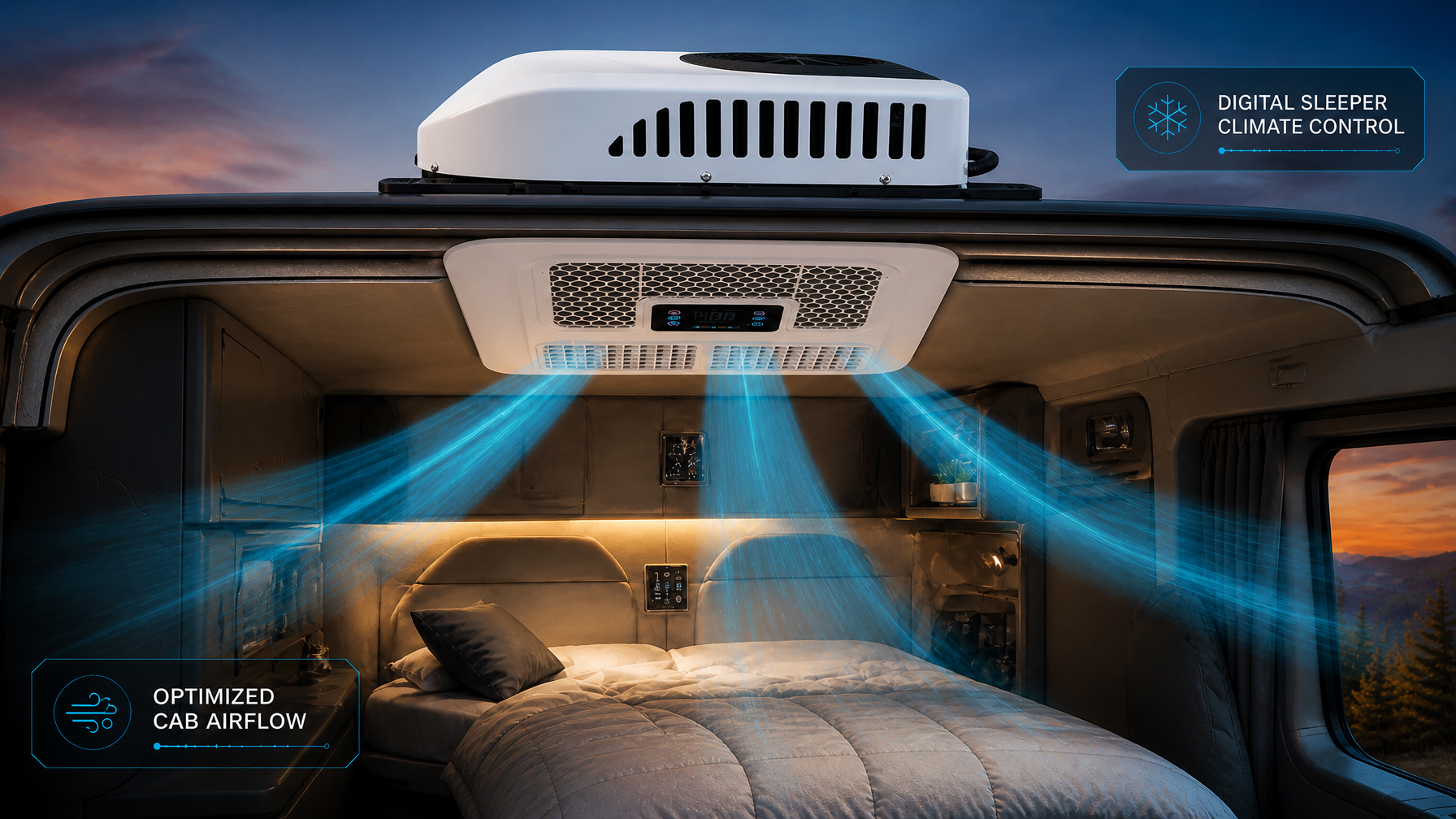
Installation quality directly influences cooling performance. The mounting position should provide suitable airflow and allow future filter cleaning or service. Rooftop units need careful attention to roof strength, sealing, drainage, and clearance from other accessories. The electrical harness should be protected from heat, sharp edges, vibration, and water. The controller should be positioned where the driver can operate it easily from the sleeper area without creating unnecessary cable tension.
Product communication should answer the questions a fleet buyer asks in October. Is the unit available in the correct 12V or 24V version? What battery configuration is recommended? How is low-voltage protection handled? What are the installation dimensions? How often should the filter be cleaned? Which spare parts are available? What information should a buyer provide for model selection? A product page that answers these questions can generate more qualified inquiries than a page that lists only cooling capacity.
A seasonal content campaign can support the product page. Publish a pre-winter workshop checklist, a battery-runtime guide, and a driver instruction card. Show real installation photographs and explain test conditions for any performance data. Use social posts to demonstrate the controller, airflow path, filter access, and nighttime operating routine. Technical clarity is especially important for international buyers who may purchase through a distributor and arrange installation locally.
For fleet managers, the most useful purchasing approach is a pilot. Select vehicles with different cab designs, routes, and battery conditions. Record stationary cooling hours, engine idle hours related to cabin comfort, battery voltage events, maintenance calls, and driver feedback. Compare results across a defined period instead of judging the product after one unusually mild or hot night.
Conclusion
A dedicated truck parking air conditioner is an autumn-ready solution for long-haul fleets that want stationary cooling without relying on continuous engine operation. Its real value depends on correct voltage selection, battery preparation, professional installation, transparent testing, and driver guidance. By preparing the product page and fleet program before winter demand rises, Defu can position its parking air conditioner as a practical operating tool rather than a generic accessory.