EN

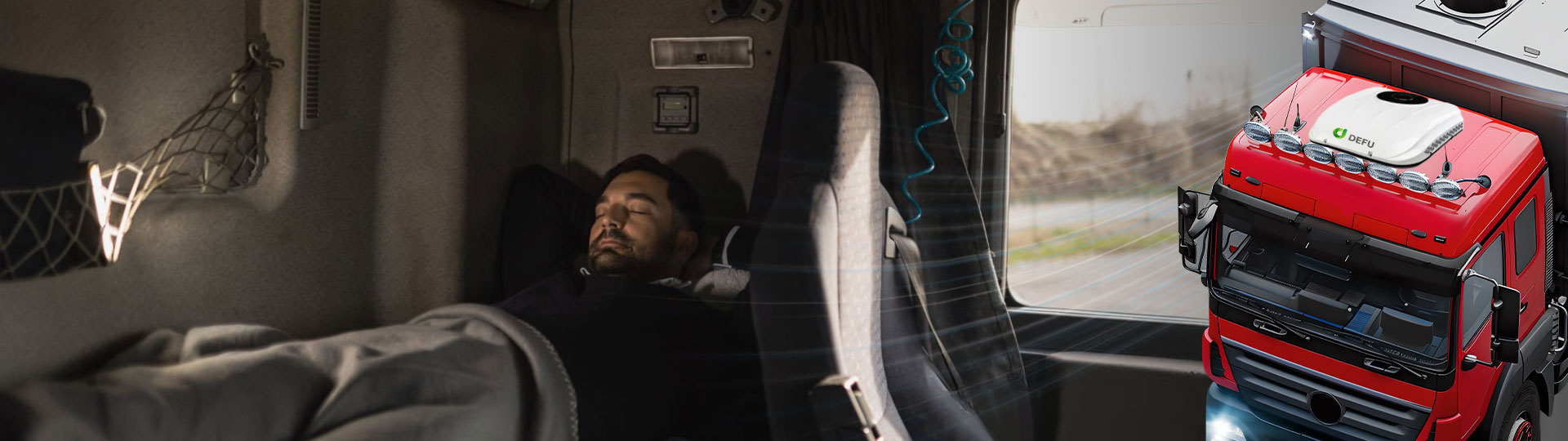
Cab Insulation and Thermal Load: The Hidden Variable in Parking AC Performance
Cab Insulation and Thermal Load: The Hidden Variable in Parking AC Performance
Two identical trucks, fitted with identical parking air conditioners, can produce completely different results. One holds a comfortable temperature overnight on modest battery draw. The other runs at maximum duty cycle, drains the bank early, and ends up on a complaint list. The difference is rarely the equipment. It is the thermal behavior of the cab itself. Understanding heat gain and air leakage gives fleet managers a cheaper and more reliable route to comfort than simply buying a bigger unit.
Why the Same Unit Performs Differently in Two Trucks
Cooling capacity must overcome heat entering the cab, plus the heat generated inside it. If the cab gains heat quickly, the compressor runs almost continuously and the battery is exhausted early, regardless of how well the unit was manufactured. Fleets often discover this only after comparing installation reports across different vehicle models and routes. The correct conclusion is not that the unit is weak, but that the load exceeds the design assumption. Once thermal load is measured, the discussion shifts from product replacement to system optimization, which is where real savings are found.
Where Cabin Heat Actually Comes From
The main contributors in a parked truck are solar radiation through glazing and thin roof panels, conduction through metal surfaces that were exposed to the sun or to a hot engine compartment, infiltration through door seals and service openings, and internal gains from the driver and equipment such as inverters, refrigerators, and electronics. During a rest period the engine and exhaust system also release stored heat into the surrounding structure. A cab with a large windscreen and no solar protection can gain more heat than a slightly larger cab with better protection, which explains many apparently contradictory field reports.

Insulation Upgrades: Curtains, Panels, and Sleeper Trim
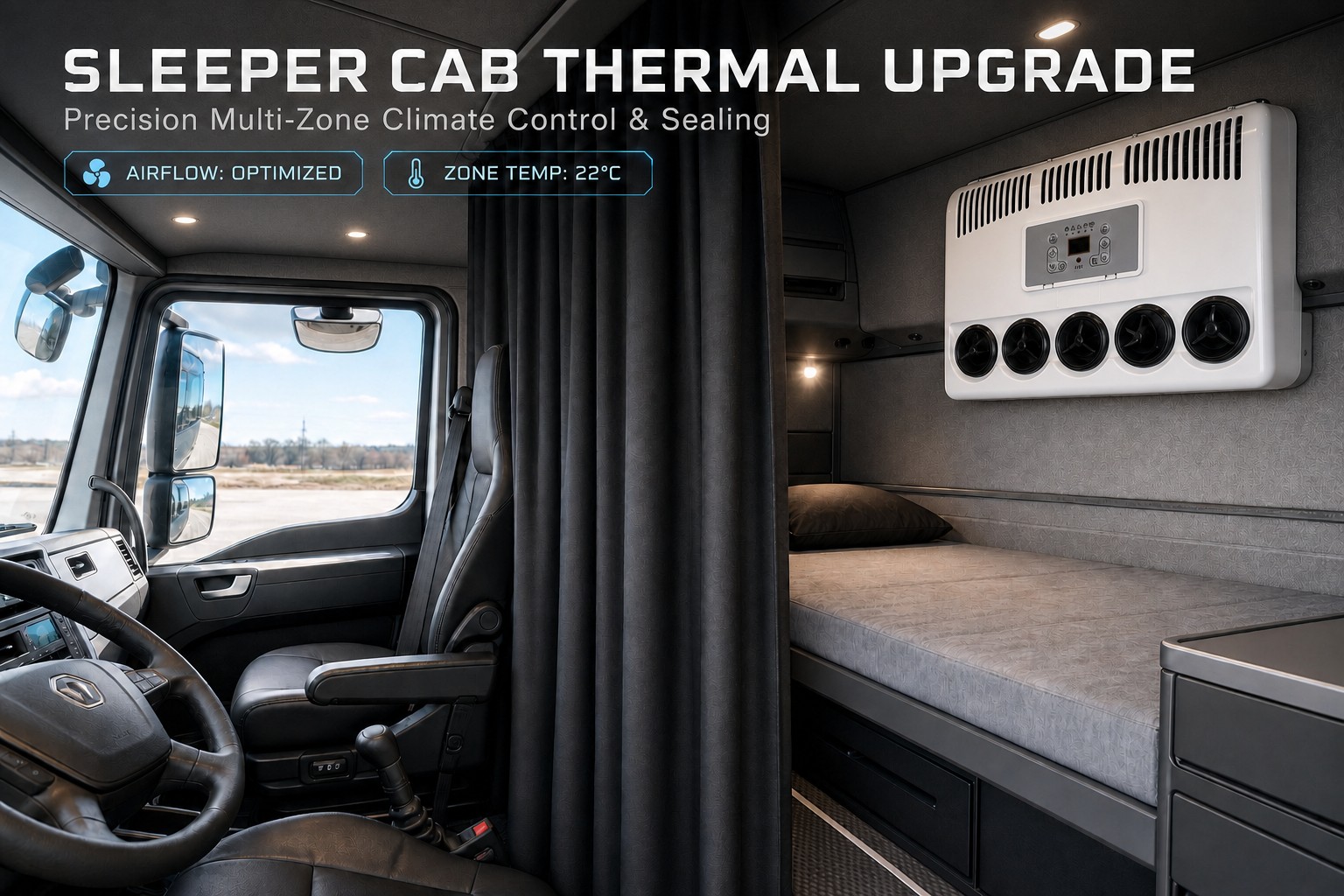
Practical upgrades are usually incremental. A properly fitted sleeper curtain reduces the volume that must be conditioned and stops cold air from being diluted by the cab front. Insulating panels on the roof and rear wall reduce conduction, while reflective windscreen covers cut solar gain substantially during daylight parking. Ceiling and wall trim in good condition acts as insulation; damaged trim with exposed metal does not. Each of these measures reduces the load the unit must handle, which translates directly into longer runtime on the same battery, or the same runtime on a smaller battery.
Air Leakage: The Cheapest Efficiency Gain
Air leakage is frequently underestimated because it is invisible. Worn door seals, cable pass-throughs drilled without grommets, and unsealed roof penetrations create a continuous exchange between conditioned and unconditioned air. In winter the same defects allow moisture to enter and condense inside the cab. Inspecting seals, sealing cable entries properly, and closing unnecessary openings is inexpensive and immediately effective. A simple smoke or pressure test during maintenance can reveal leaks that drivers describe vaguely as "the unit just does not keep up".
Measuring Thermal Load Before Buying a Bigger Unit
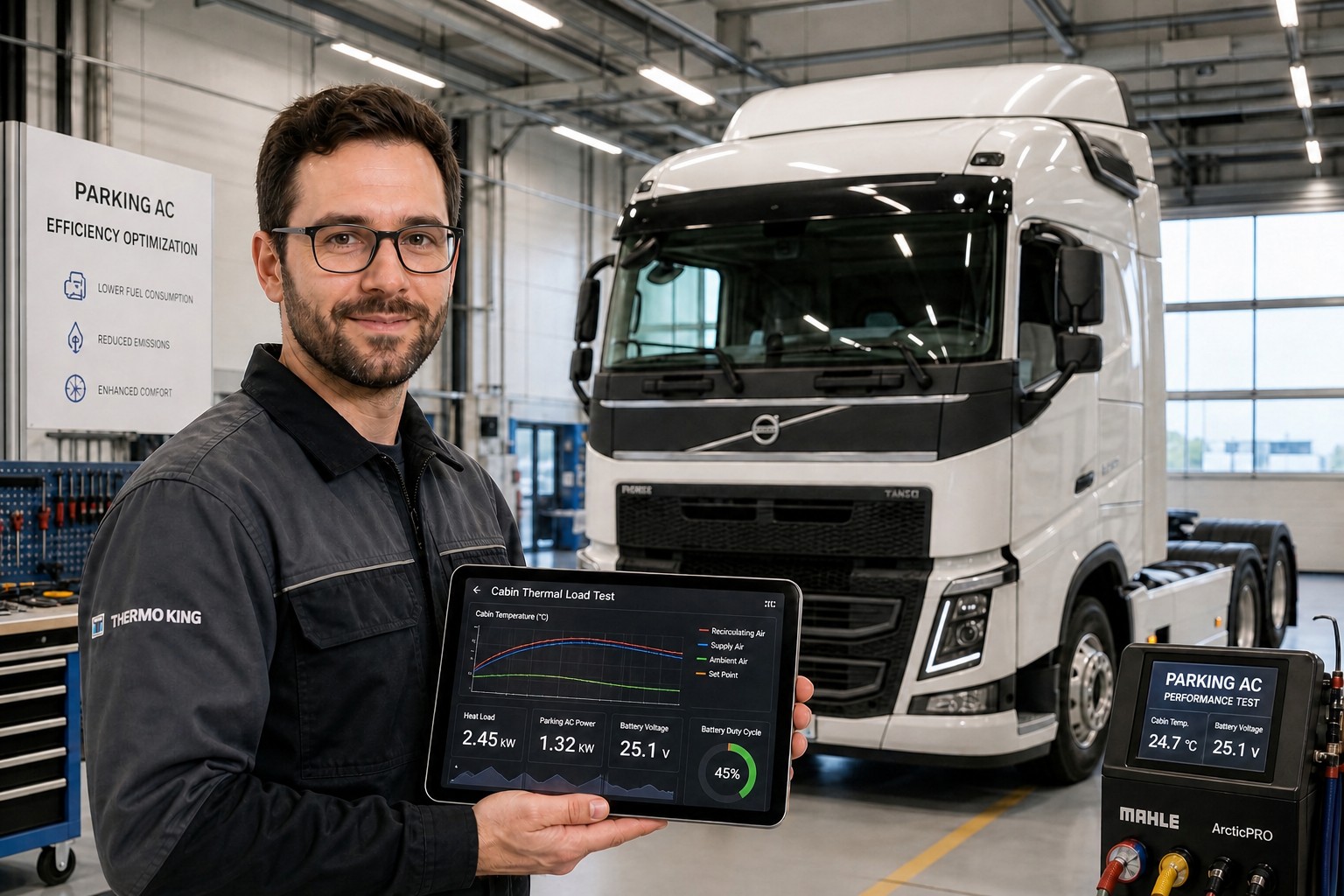
Before specifying a larger unit, measure. Record ambient temperature, cab temperature at the start and after a fixed interval, setpoint, fan speed, and battery voltage. A cab that holds temperature at low fan speed has adequate capacity; a cab that cannot hold temperature regardless of fan speed has an insulation or infiltration problem, not a capacity problem. This simple test takes one night per vehicle type and produces data that supports both technical decisions and budget requests. It also gives the fleet a baseline for measuring the benefit of insulation upgrades.
Matching Capacity to the Real Load
Capacity selection should follow thermal load, sensible setpoints, and expected operating hours. Oversizing does not solve an insulation problem and creates its own costs: higher current draw at startup, larger cables, heavier battery requirements, and more physical space on the roof. Undersizing produces continuous operation, short battery life, and driver dissatisfaction. The practical objective is a configuration that reaches the setpoint within a reasonable time and then cycles, with duty cycle low enough that the battery is not exhausted before the rest period ends.
Prioritizing Upgrades by Payback
Fleets should rank improvements by cost and effect rather than by appearance. Sealing and curtain work is usually the cheapest and often the most effective. Reflective glazing protection follows. Panel insulation involves more labor and is best scheduled when a truck is already in the workshop for other reasons. Battery or unit upgrades come last, and only where measurement shows they are genuinely needed. This sequence means the fleet spends on the constraint instead of on the symptom, and it produces a defensible capital plan.
Conclusion
Thermal load, not product specification alone, decides whether a parking air conditioner performs well. Solar gain, conduction, infiltration, and internal heat sources all determine how hard the unit must work and how long the battery will last. Measuring that load, sealing the cab, and insulating the sleeper produces measurable improvements at a fraction of the cost of upgrading equipment. Defu helps fleets evaluate cab conditions as part of the selection process, so that the recommended configuration matches the vehicle rather than the catalog.
If you have vehicles where the parking air conditioner works well and others where it does not, send us the vehicle models and a short description of the difference. We will help you identify whether the constraint is thermal load, electrical supply, or configuration, and recommend the most economical path to consistent performance.